Executive Summary: The 30-Second Read
- Niseko Has Reached Maturity
With yields tightening and entry prices fully reflected, Niseko has transitioned from a growth opportunity into a well-established status asset.
- Where Capital Is Broadening Its Focus
High-profile commitments in the Myoko–Madarao corridor suggest institutional interest is beginning to extend beyond Hokkaido—supported by new luxury infrastructure and Tokyo-oriented accessibility.
- Rising Friction in Established Destinations
As mature resort hubs introduce additional tax layers and regulatory complexity in 2026, emerging regions offer comparatively simpler points of entry.
- How Portfolio Thinking Is Evolving
The next phase of Japanese real estate investment is less about identifying the “next Niseko,” and more about thoughtfully combining year-round mountain living with cultural and generational assets.
In 2016, the answer to where one should buy in Japan was uncomplicated: Niseko. You invested for capital appreciation, and the market rewarded that clarity.
In 2026, Niseko still holds value—but for a different reason. It is refined, globally recognized, and priced accordingly. Today, Niseko offers stability and status rather than early-stage upside.
For investors seeking alpha—where valuation headroom intersects with long-term conviction—the opportunity set has quietly shifted.
Public pricing indicators, recent development announcements, and evolving patterns of use all point in the same direction: attention is no longer concentrated in a single ski destination. While Hokkaido remains important, incremental capital is beginning to explore other regions with fresh eyes.
What many investors now seem to be prioritizing are places that offer:
- Ease of access, without reliance on flights
- Authenticity, free from artificial construction
- Upside, without unnecessary operational friction
Below are three regions I am encouraging private clients to consider carefully as they look toward 2026.
Region 1: Myoko Kogen (Niigata)
From Ski Resort to Year-Round Mountain Town
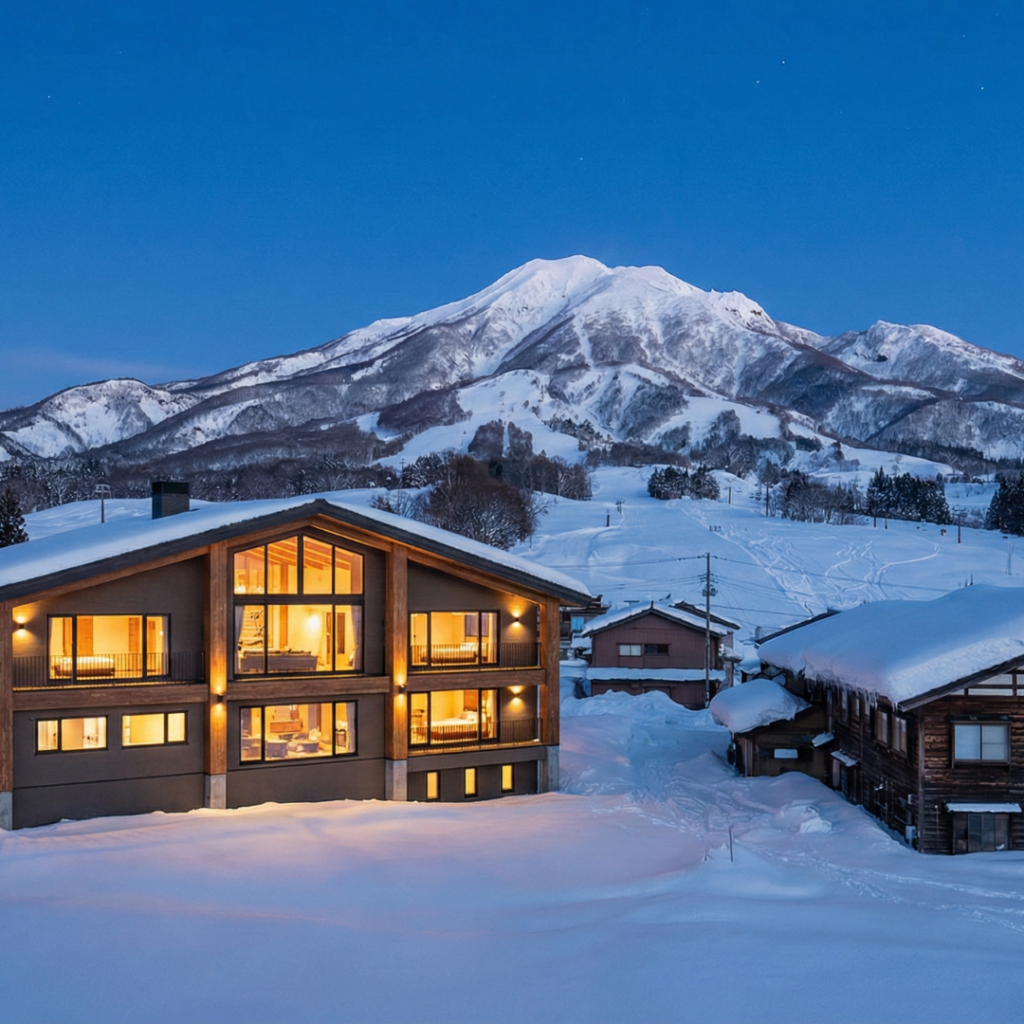
If Niseko is often likened to Aspen, Myoko Kogen is gradually beginning to resemble a more European model: a mountain town that reveals itself across all four seasons, rather than only in winter.
For many years, Myoko was known primarily for its snowfall—often rivaling, and at times exceeding, Niseko depending on elevation and measurement. Snow, however, was never what Myoko lacked. Infrastructure was.
That imbalance is now being addressed.
Why Capital Is Taking Notice
The arrival of a first global luxury brand often marks a turning point for a destination. In Myoko’s case, that moment is represented by the Six Senses Myoko project, scheduled to begin construction in April 2026 following permitting in March.
This is not a winter-specific investment. Six Senses properties are typically conceived around wellness, nature, extended stays, and multi-season use.
Beyond a single development, larger-scale commitments—most notably by Patience Capital Group—reinforce the sense that Myoko is being approached as a long-term, resilient destination rather than a seasonal resort.
The Structural Advantage: Time
From Tokyo Station, the Hokuriku Shinkansen reaches Joetsu-Myoko in approximately two hours. Myoko-Kogen is generally another 30–40 minutes by local transfer.
That simplicity carries real significance.
For Tokyo-based executives, families, and second-home owners, time is often the most constrained resource. Myoko’s accessibility allows for weekend visits, mid-week stays, and repeat use across seasons—patterns that naturally support year-round life.
A Town, Not a Theme Park
Unlike heavily internationalized resort enclaves, Myoko has preserved its local rhythm. Schools, small businesses, and daily life remain visible and active.
In recent years, new cafés, thoughtfully renovated inns, longer-stay accommodations, and remote-work use outside peak ski months have quietly increased. These are subtle indicators, but they are often the most telling.
Gradually, Myoko is being understood not as a winter resort, but as a four-season mountain town, where snow enhances life rather than defining its limits.
Region 2: Madarao (Nagano)
The Value Layer Alongside the Core
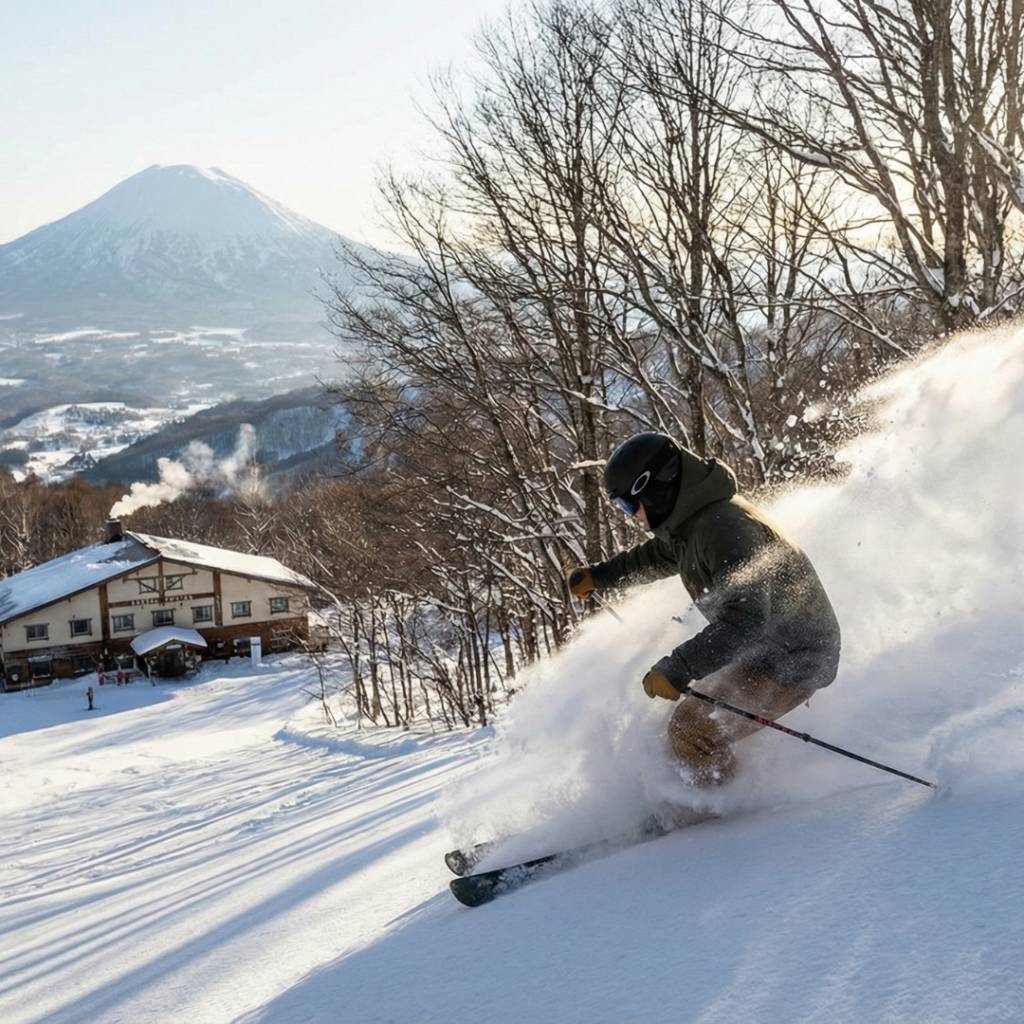
If Myoko represents the emerging center, Madarao serves as the value layer shaped by proximity.
Adjacent geographically and sharing the same climate systems, Madarao benefits from much of the same regional momentum—yet continues to offer a meaningfully lower entry point.
As key areas of Myoko begin to reflect future expectations in their pricing, demand naturally extends outward. This kind of “twin-peak” relationship is familiar in maturing resort regions around the world.
Why It Matters
Madarao does not compete with Myoko; it complements it.
The repositioning of assets to meet international service standards—such as the rebranding of Madarao Kogen Hotel under Accor’s MGallery collection—suggests a shift in how the area is being perceived.
For investors, Madarao offers:
- Entry into the same regional growth story at a lower basis
- Exposure to demand overflow from a more premium neighbor
- A measured way to participate without paying peak prices
Within a portfolio, it functions naturally as the value layer beside a core holding.
Region 3: Sado Island (Niigata)
Cultural Depth and Generational Perspective
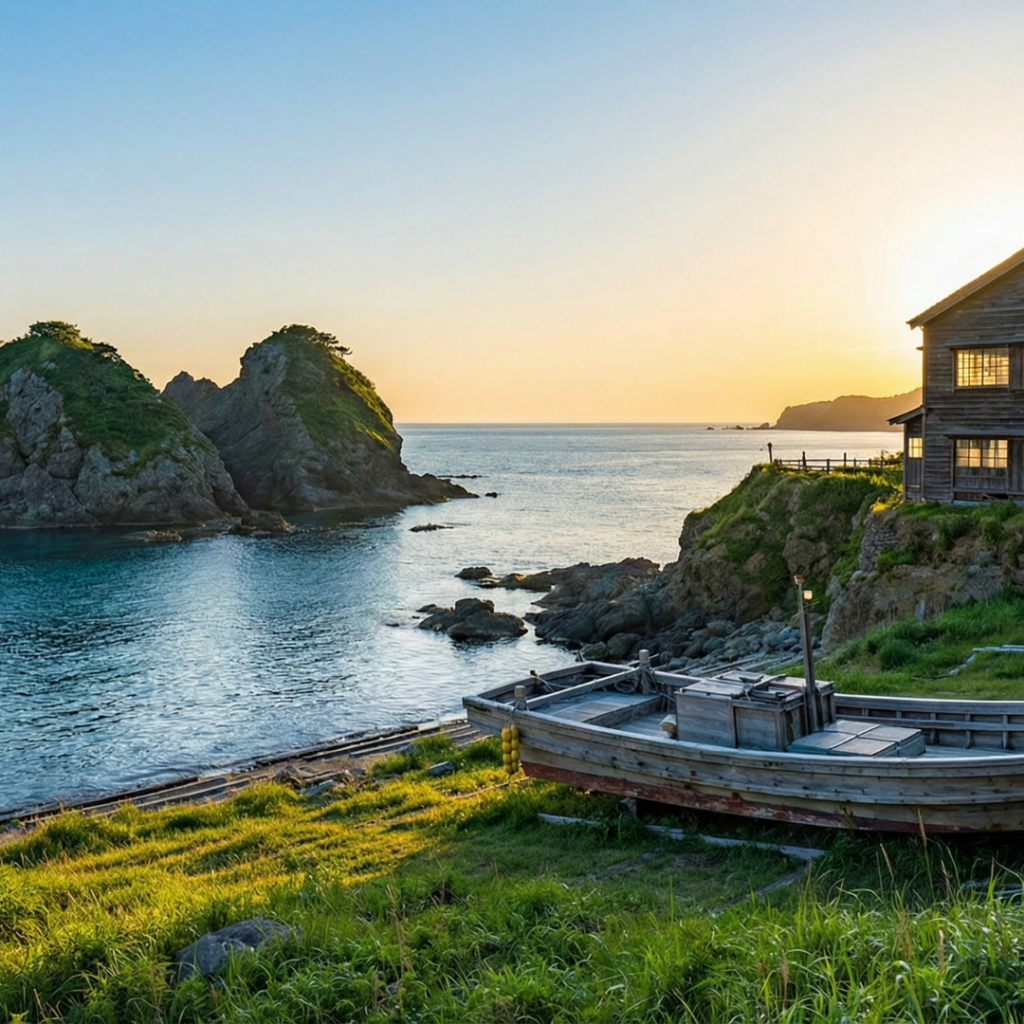
Here, a more contrarian dimension enters the discussion.
Many international investors still frame Japan exposure primarily around snow. Over time, that approach can become limiting.
A more resilient lifestyle portfolio often benefits from complementary assets—one that supports year-round mountain living, and another that expresses Japan’s cultural depth through heritage, landscape, and summer use.
This is where Sado Island comes into focus.
Why Sado Stands Apart
Sado is not an extension of the ski narrative. It exists on a different axis altogether.
In July 2024, Sado was designated a UNESCO World Heritage site. Comparable recognitions in Kyoto and Shirakawa-go ultimately led to meaningful repricing—but only after long periods of quiet neglect.
Sado remains early in that arc.
Access and Optionality
Historically, access friction—train, bus, ferry—kept prices modest. That friction is slowly beginning to ease. Toki Air has established Niigata as a regional hub and has conducted survey and test flights into Sado Airport.
There is no scheduled route at present, nor is one assumed. From an investment perspective, this represents optionality, rather than a prerequisite.
The logic is simple: positioning typically occurs before access is fully normalized.
A Personal Reflection
This analysis also carries personal meaning.
My grandfather was a pioneer of tourism on Sado, founding both the Aikawa Yamaki Hotel in 1969 and the Ryotsu Yamaki Hotel. I was born into those buildings and grew up observing both the vitality and the long quiet that followed.
The Aikawa property closed in 2015. Ryotsu ceased operations in January 2022.
In late 2025, a Tokyo-based firm acquired the Ryotsu site, announcing plans to reopen it as a high-end destination by 2027.
When institutional capital begins acquiring assets that were distressed only a few years earlier, it often suggests that the lowest point has already passed.
Portfolio Logic: How the Pieces Relate
This is not a question of choosing between Myoko and Sado.
It is a question of time horizon and balance.
- Myoko offers a year-round mountain base with winter upside and strong repeat-use dynamics
- Madarao provides value-oriented exposure to the same regional growth
- Sado contributes cultural depth, diversification, and generational perspective
Together, they form a portfolio that is not overly dependent on a single season, regulatory environment, or tourism cycle.
Frequently Asked Questions
Yes—foreigners can generally purchase real estate in Japan, including freehold land. However, practical constraints can include financing, and there are also compliance considerations (e.g., reporting requirements in some cases, and potential restrictions on land use near designated security-sensitive sites). Most “Smart Capital” deals are cash transactions or leveraged against assets in your home country.
Kyoto is magnificent, but it faces overtourism pressure and tightening cost/regulatory dynamics—for example, Kyoto City’s accommodation tax rates are scheduled to rise from March 1, 2026, increasing the overall “friction” for operators and guests. Sado offers deep cultural immersion (Noh theater, history) without the crowds, often at a fraction of the entry cost seen in Japan’s most saturated heritage markets.
All emerging markets carry risk. The risk in Sado is liquidity—it takes longer to sell than a condo in Tokyo. That is why it is a “legacy play,” not a “flip.” You buy Sado to enjoy it for 10–20 years, not to day-trade it.
Final Thought
A quieter chapter is emerging in Japanese real estate.
Here, structure replaces momentum as the defining force.
For now, the window remains open—but it is gently narrowing.
Listings are easy to find.
Designing a long-term life and asset base in Japan requires something more considered.
This article is for informational purposes only and does not constitute investment, legal, or tax advice.
Sources
・Six Senses Myoko (construction April 2026; permitting expected March 2026)
・Accor MGallery signing (Madarao Kogen Hotel + Lime Resort Myoko)
・Niseko Town (lodging tax + layering with Hokkaido accommodation tax from Apr 1, 2026)
・Sado UNESCO inscription (official Japan government statement)
・Toki Air “Go to Sado” page (current practical access via jetfoil/ferry)
・Fund Cloud Holdings news (Ryotsu Yamaki project)
・Kyoto City accommodation tax revision (effective March 1, 2026)