Sado Island · Japan Investment Insights · April 2026
Where untouched Japan meets living culture
Sado Island is not Kyoto. That is its greatest strength.
I stood in a cedar forest on Sado Island and watched 600-year-old Noh theatre performed outdoors — beneath cherry trees in full bloom.
This is Sado Island. And the world has barely noticed.
I grew up connected to this island. My family’s roots in Niigata’s hospitality industry go back generations. But yesterday reminded me why I keep coming back — and why I believe Sado is one of the most important untold stories in Japanese travel and real estate.
What I witnessed
Noh at Daizen Shrine — a living national treasure
On April 8, Sado Island held its annual Noh festival across multiple shrines simultaneously. The centrepiece: an outdoor performance at Daizen Shrine (大膳神社) — one of Japan’s oldest surviving Noh stages.
Performers in white robes moved slowly across ancient wooden boards. A painted pine tree backdrop. A thatched roof, moss-covered and perfectly imperfect. The audience sat on simple plastic chairs — the same kind you might find at a school sports day — and yet the atmosphere was profoundly sacred.
Television crews captured the scene from multiple angles. Foreign visitors sat in the audience, visibly moved. This was not a reconstructed tourist experience. This was a living tradition, performed by real people for their community — and we were invited to witness it.
The key insight
What Kyoto no longer offers
Kyoto is magnificent. But Kyoto is also crowded, commercialised, and expensive. The authenticity that made it famous is increasingly hard to find beneath the surface of luxury hotels, overtourism, and English menus.
Sado Island offers something different. Something rarer.
It offers untouched Japan — nature, culture, and community that has not yet been packaged for mass consumption. The cherry blossoms on the road to Daizen Shrine were not staged. The Noh performers were not hired for a show. The food served afterwards was not from a catering company.
This is what today’s most discerning travellers are searching for. High-net-worth individuals from Singapore, Hong Kong, California, and Australia are tired of polished, predictable luxury. They want depth. They want authenticity. They want to feel that they have discovered something the world has not found yet.
Sado Island is exactly that place.
Coming soon
Oni-Daiko: the next chapter begins next week
The Noh festival is just the beginning of spring on Sado Island. From next week, the island’s famous Oni-daiko (鬼太鼓) season begins — a tradition of masked drum performances that travel from village to village across the island.
What makes Oni-daiko remarkable: every village has its own unique style. The masks, the rhythm, the costumes — all differ between communities. This is not a uniform “Japanese folk performance.” It is a living tapestry of micro-traditions, each one shaped by centuries of local identity.
Why Sado Island stands out
One of Japan’s last unspoiled cultural landscapes
- 600-year-old Noh tradition — performed live at ancient outdoor shrines
- Oni-daiko season: each village has its own unique masked drum performance
- Cherry blossoms, cedar forests, pristine coastline — all in one island
- Foreign visitors already arriving — but before mass tourism takes hold
- Accessible from Tokyo via Niigata — under 3 hours by shinkansen + ferry
- Zero luxury hospitality infrastructure — the biggest gap, and the biggest opportunity
The inflection point
The UNESCO effect — a double designation
In July 2024, the Sado Island Gold Mines were officially inscribed as a UNESCO World Heritage Site — Japan’s 26th. The moment Sado crossed from a local secret to a globally recognised destination.
The shift is already visible. Sado City projected a 20% rise in overnight visitors following inscription, with an estimated ¥52 billion boost to the local economy. NIPPONIA Sado Aikawa was named to TIME Magazine’s “World’s Greatest Places” list in 2025. AFAR Magazine selected Sado Island as one of its top destinations for 2026.
But here is the detail most people miss.
Sado Island carries two UNESCO designations. The Gold Mines are a UNESCO World Heritage Site. And Sado’s Noh theatre tradition — performed at the very shrines I visited yesterday — is a UNESCO Intangible Cultural Heritage.
This double designation is extraordinarily rare. And it is almost entirely unknown to international audiences.
| Metric | Pre-inscription (2023) | Post-inscription (2026) | Source |
|---|---|---|---|
| Global search & interest | Mostly domestic | Growing international | AFAR, TIME coverage |
| Boutique accommodation | Very limited | NIPPONIA + new projects | TIME “World’s Greatest Places” 2025 |
| Overnight visitor forecast | Baseline | +20% projected | Official Sado City estimate, 2024 |
| Economic impact forecast | — | ¥52 billion projected boost | Official Sado City estimate, 2024 |
| Visitor profile | Regional / domestic families | International HNWIs increasing | Nikkei Asia, tourism authority reports |
| International media | Minimal | AFAR 2026, TIME 2025 | Confirmed publications |
Sources: Sado City official projections, Nikkei Asia, TIME Magazine, AFAR Magazine. Forward-looking figures are projections only.
The investment lens
One luxury hotel. That is all it would take.
Sado Island has every ingredient for world-class luxury travel. Ancient culture. Pristine nature. Authentic community. A fascinating history — from gold mines to exiled poets to Japan’s most celebrated Noh theatre tradition.
What it lacks is a single high-quality hospitality anchor — a property that translates this depth into an experience the world’s wealthiest travellers can access with confidence.
One well-positioned ryokan or boutique hotel, designed with care, marketed to the right audience, could change the trajectory of this island entirely. The opportunity is rare and it is real.
We are still early. The infrastructure gap is real. And that is precisely where the opportunity sits.
I work as an Owner’s Representative for international investors acquiring and managing high-value properties in Japan’s Snow & Sun regions — Niigata and Okinawa, including Sado Island. My work covers acquisition, renovation, and asset management — before these markets become obvious.
Learn more at ayakoyamaguchi.com →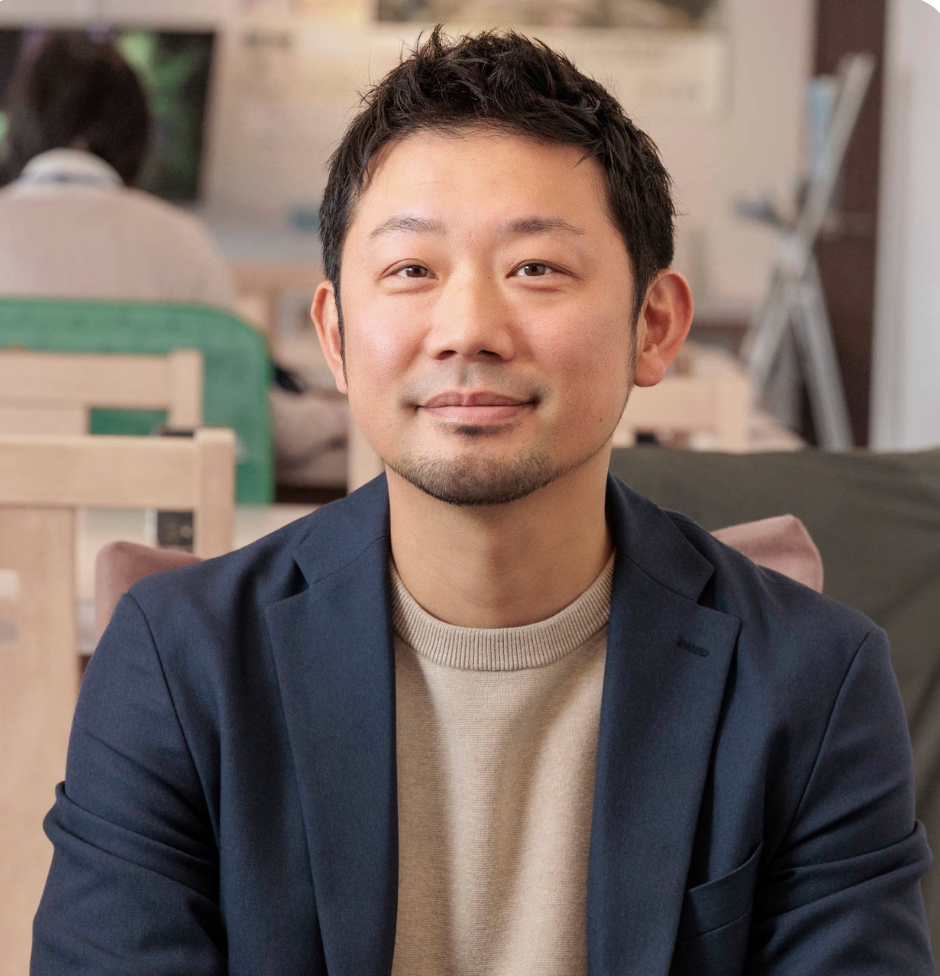
Photos & video courtesy of Tatsuya Sato, Executive Director — Sado Tourism & Exchange Organization (佐渡観光交流機構)
Your Next Steps
1. Free Discovery Call (15 Mins) Not sure if Niigata or Okinawa is right for you? Let’s have a brief chat to check your compatibility with the market. [ Book Free Discovery ]
2. The “Japan Portfolio Roadmap” Session (60 Mins / Paid) Stop guessing. We will input your specific budget and goals into our proprietary model to create a custom cash-flow simulation.