Why Future-Proofing Japanese Real Estate Matters More Than Ever
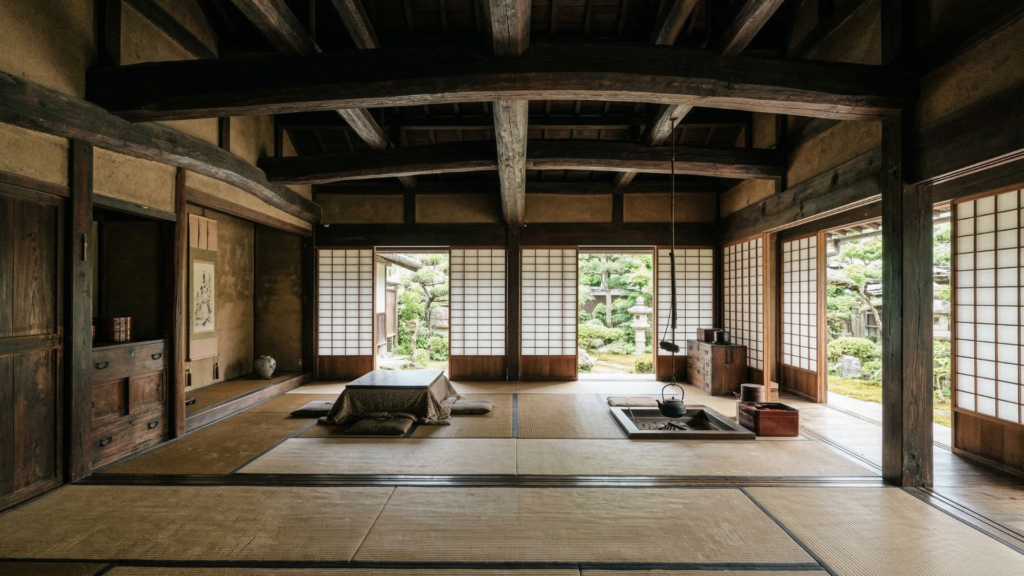
Future-proofing Japanese real estate begins with understanding that heritage value alone is not enough. For many international investors, buying a traditional Japanese home begins with emotion — but long-term performance depends on far more than beauty, rarity, or story.
You step into a kominka and immediately feel what makes it special: old timber, natural materials, handcrafted architecture, and a sense of history that modern buildings rarely replicate. In regions such as Niigata and Okinawa, that experience can be especially powerful. The right property can feel less like a transaction and more like the discovery of something rare.
But rarity alone does not protect value.
A heritage home may be visually extraordinary and still perform poorly as an asset. It may look timeless while quietly carrying structural weakness, legal ambiguity, energy inefficiency, high maintenance exposure, or future resale friction.
That is why I believe future-proofing Japanese real estate is no longer optional for serious buyers of heritage property. It is not enough to restore beauty. The asset must also be made more resilient, more intelligible, and more usable for the next decade of ownership.
As a Japan Real Estate Asset Strategist and Owner’s Representative, I work with international buyers to identify, reposition, and manage high-value assets in Japan’s “Snow & Sun” regions, particularly Niigata and Okinawa. My work sits at the intersection of tax strategy, architecture, local execution, and long-term asset planning. In practical terms, that means helping clients turn culturally significant but under-optimized properties into stronger-performing real estate.
Executive Summary
- The Appeal: Traditional Japanese homes such as kominka offer rare craftsmanship, cultural depth, and scarcity value. For international buyers, that combination can make them compelling long-term lifestyle and investment assets.
- The Risk: Heritage charm alone is not an investment strategy. Without rigorous due diligence and disciplined execution, a heritage property can conceal structural, legal, operational, and resale risks that are expensive to solve later.
- The Framework: As buyer expectations rise around resilience, efficiency, and transparency, I use what I call the 2030 Resilience Audit to assess whether an owner can move a heritage property beyond cosmetic renovation and positioned for stronger long-term resilience and value retention.
A strategic framework for international investors seeking to reposition Japan’s heritage homes through stronger resilience, better performance, legal clarity, and long-term asset discipline.
The Hidden Cost of “Beautiful and Traditional”
Buying a heritage home is often easier than owning one well.
Many buyers assume the main challenge is finding the right property, negotiating the purchase, and completing a renovation. In reality, those are only the visible steps. The harder work begins once you ask whether the house can genuinely support modern expectations of comfort, safety, governance, and long-term value.
This is where many projects go wrong.
A buyer acquires an old house at what seems like an attractive entry price. They complete a light renovation. The photographs improve, the story sounds compelling, and the property feels transformed. Yet behind the upgraded finishes, the original risks remain: poor insulation, roof deterioration, moisture intrusion, aging utilities, unclear title history, unresolved land boundaries, or uncertain structural performance.
These are not minor issues. They are the difference between a property that merely looks restored and one that has been strategically repositioned.
A traditional Japanese house can remain deeply appealing while still being expensive to heat, difficult to insure, operationally inefficient, or hard to explain to a future lender or buyer. In other words, aesthetic value and asset quality are not the same thing.
Heritage charm can attract attention. It cannot, by itself, carry the investment case.
What I Mean by the “2030 Resilience Audit”
When I use the phrase 2030 Resilience Audit, I am describing my own framework, not an official industry designation.
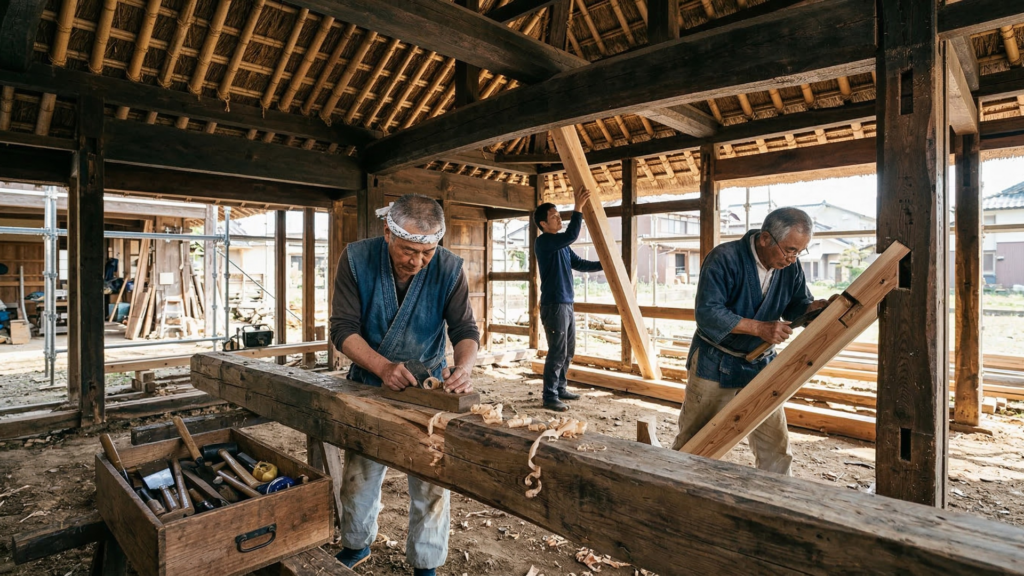
I use it to assess whether a heritage property is being prepared for where the market is going, rather than where it has been. Across global real estate markets, buyers and advisors are paying closer attention to building performance, climate resilience, operating efficiency, documentation, and transparency. In Japan, those themes are becoming increasingly relevant as well, particularly for buyers who want assets that remain attractive over time rather than simply picturesque on day one.
The purpose of the audit is not to promise perfection. It is to ask better questions early:
- Can the building be upgraded in a way that meaningfully improves comfort and performance?
- Can the structure be understood and reinforced intelligently?
- Can legal and boundary issues be clarified before they become expensive surprises?
- Can operating costs be reduced through better design choices?
- Can the asset be documented in a way that improves future transferability?
These questions often determine whether a heritage acquisition becomes a resilient long-term holding or a difficult passion project.
Across Japan, building and housing policy continues to evolve in response to safety, efficiency, and long-term asset quality expectations.
Link building and housing policy to MLIT.
Up-Cycling a Heritage Asset, Not Just Renovating It
One of the most important distinctions I make with clients is the difference between renovation and strategic up-cycling.
A cosmetic renovation changes appearance. Strategic up-cycling changes capability.
With a heritage property, the goal is not to erase age. The goal is to retain the elements that create cultural and emotional value while upgrading the building’s practical performance for modern ownership.
That process starts with understanding what is truly there: frame condition, water exposure, drainage logic, thermal weakness, roof integrity, utility limitations, and opportunities for reinforcement. Without that baseline, renovation becomes guesswork.
Once the building is properly understood, the real work begins. The best heritage projects preserve the visible soul of the house while rethinking the systems that determine day-to-day livability. That usually includes insulation, air sealing, heating and cooling strategy, moisture control, plumbing, electrical upgrades, and roofing details.
Done properly, this work does not diminish a kominka. It gives it a more viable future.
In Niigata, that may mean confronting snow load, winter heat loss, and seasonal moisture. In Okinawa, it may mean designing for humidity, salt air, storms, and a different maintenance cycle. In both regions, the principle is the same: a heritage asset should not simply be admired. It should be prepared to perform.
The Circular Advantage of Better Material Choices
Another important part of future-proofing Japanese real estate is material intelligence.
Heritage renovation does not mean rejecting modern materials. It means using them selectively and respectfully. The right interventions can improve durability, thermal performance, maintenance planning, and long-term efficiency without undermining the building’s character.
Better window systems, improved insulation assemblies, more durable envelope components, and lower-impact material choices can materially improve how a building functions. Traditional Japanese homes are often admired for their atmosphere but criticized for being cold, drafty, and expensive to operate. Closing that gap matters, especially for overseas owners who want predictable usability and lower long-term friction.
The aim is not to pursue sustainability as a slogan. It is to use better materials and better detailing to extend the useful life of the asset in a commercially rational way.
This direction also aligns with Japan’s broader carbon neutrality strategy and decarbonization agenda.
Link carbon neutrality strategy to METI.
Structural Planning and My “Seismic 3.0” Approach
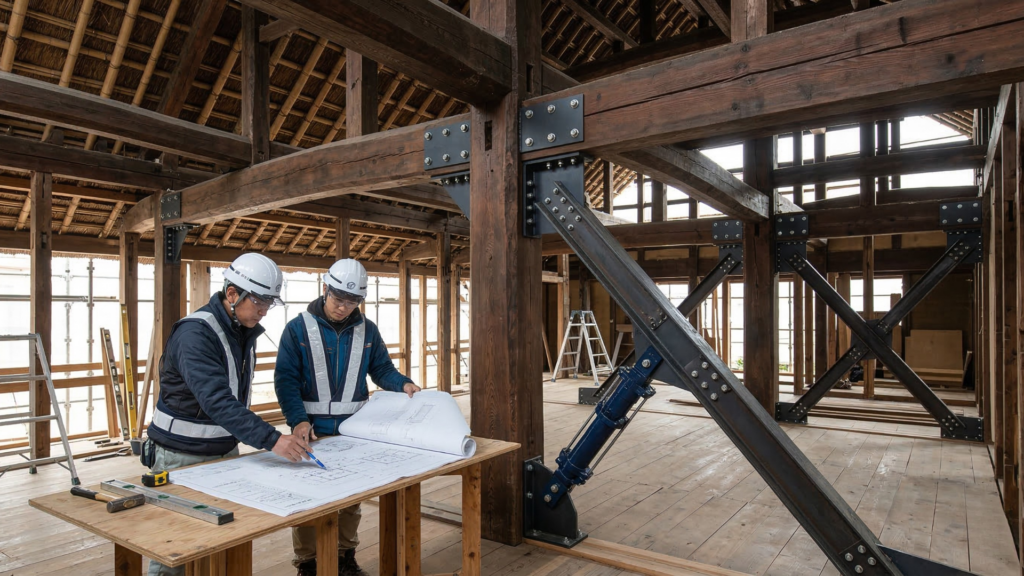
For most international buyers, seismic risk is the first issue that raises serious concern.
That concern is valid. Heritage properties require particularly careful analysis because their age, repair history, and construction methods can vary significantly.
When I refer to Seismic 3.0, I am again referring to my own working framework, not an official code category. It is the term I use for a more advanced approach to structural thinking in heritage assets.
Rather than treating seismic compliance as a box to tick, I encourage clients to think in terms of structural confidence. That means understanding what condition the building is actually in, what reinforcement measures are realistic, how they can be integrated without unnecessarily damaging heritage character, and what level of documentation a future buyer, insurer, or lender may reasonably expect.
Sometimes the right strategy involves strengthening connections, selective steel intervention, engineered reinforcement, or foundation-related work. Sometimes it means discovering that the economics of the building do not justify the scope of work required. That, too, is valuable information.
No responsible advisor should promise that a building is guaranteed to remain safe or perfectly bankable for decades into the future. What good structural planning can do is materially reduce risk, improve resilience, and support more informed ownership decisions.
For me, that is the real purpose of the seismic conversation. It is not fear-based marketing. It is disciplined asset stewardship.
Legal Clarity Is Part of Asset Quality
One of the most underestimated risks in Japanese heritage real estate is documentation.
A beautiful house may still suffer from unresolved title issues, outdated records, unclear land boundaries, inconsistent renovations, inheritance-related complications, or incomplete information on utilities and rights of access. These issues are not always obvious at the beginning, especially to overseas buyers relying on partial translations or fragmented local advice.
But they matter enormously.
Legal clarity is not separate from value creation. It is part of value creation. The cleaner the ownership story, the easier it becomes to plan, finance, insure, manage, and eventually transfer the asset. The more unresolved ambiguity remains, the narrower the future buyer pool is likely to become.
That is why rigorous due diligence must extend beyond the building itself. It should include land, title, boundary alignment, local regulatory realities, use restrictions, tax implications, and the consistency of the property record as a whole.
Designing for Exit Optionality From the Beginning
Many investors begin with one question: how do I buy the right property?
I prefer to add a second question immediately: who could realistically buy this from me later?
That does not mean every project should be designed for sale. It means every serious acquisition should preserve optionality.
Even buyers who intend to hold a property privately for years may later decide to refinance, lease, reposition, transfer, or sell it. Personal goals change. Market conditions change. A property that feels emotional today may need to function as a financial decision tomorrow.
This is where disciplined curation matters. A strong heritage asset is not just renovated. It is recorded, organized, and translated into a form that another serious party can understand. Structural decisions are documented. Legal issues are clarified. Design logic is consistent. Maintenance implications are visible. The overall story of the asset becomes more coherent.
That does not guarantee an institutional exit. But it can broaden the future buyer pool and improve long-term flexibility.
Why a Local Owner’s Representative Matters
Overseas investors often underestimate how much of Japanese real estate value creation depends on coordination rather than concept.
The challenge is not that Japan lacks quality. The challenge is that quality emerges through process: language alignment, local relationships, contractor management, technical interpretation, sequencing, documentation, and constant attention to detail.
That is why I believe the Owner’s Representative role is so important.
My job is to remain on the owner’s side of the table throughout the process: questioning assumptions, coordinating specialists, protecting the logic of the investment, and ensuring that local execution remains aligned with the owner’s long-term goals.
This is quiet work, but it is where a great deal of value is either protected or lost.
The Ayako Perspective
Living and working in Niigata has shaped the way I think about heritage assets.
Every winter, I see what the climate demands from a building. I see which structures endure, which details fail, and how quickly romantic ideas about property ownership can collide with physical reality. At the same time, I continue to be impressed by the intelligence and dignity of Japan’s older houses.
But the next century will ask different things of these buildings than the last one did.
They will need to meet higher expectations of comfort, stronger expectations of documentation, and more global expectations of transparency and performance. They will need owners who appreciate both their beauty and their complexity.
I see my role as helping connect those worlds: heritage and finance, local building culture and international ownership standards, architectural sensitivity and commercial discipline.
Final Thought: Beauty Is Only the Beginning
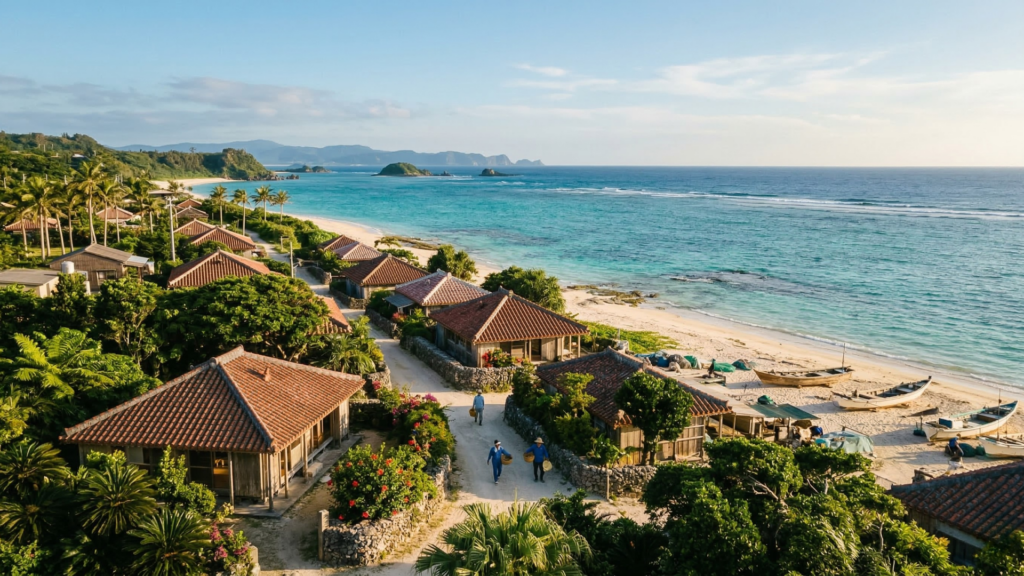
The strongest heritage investments in Japan will not necessarily be the ones with the most dramatic before-and-after photographs.
They will be the ones where the owner invested in the invisible work: due diligence, structural logic, legal clarity, technical planning, and disciplined execution. They will be the ones that can withstand scrutiny as well as admiration.
That is the purpose of the 2030 Resilience Audit.
It is not a slogan. It is not a promise of certainty. It is a framework for helping international investors think more clearly about what it takes to make a heritage property viable over the long term.
If you are considering an acquisition in Japan, the real opportunity is not simply to own something beautiful. It is to own something beautiful that has been thoughtfully prepared for the future.
Frequently Asked Questions
Not when the work is handled carefully. The best projects preserve the visible architectural identity of the home while discreetly improving insulation, systems, moisture control, and day-to-day livability behind the scenes.
Because flexibility is part of sound ownership. Even if your intention is to hold the asset long term, good documentation, stronger structural planning, and legal clarity help preserve your options if circumstances change.
No. Some buildings are too compromised structurally, legally, logistically, or economically. A credible advisor should be prepared to say no when the property does not support the strategy.
An Owner’s Representative protects the owner’s interests across acquisition, design, renovation, coordination, and execution. For overseas investors, that means local oversight, clearer reporting, and better alignment between strategy and on-the-ground delivery.