

💡 This post may contain affiliate links. If you click and book through my link, I may earn a small commission at no extra cost to you. Thank you for supporting this blog!

Are you thinking about moving to Japan?
Maybe you are in your 40s, 50s, or even your 60s.
You might be sitting at your desk right now, staring at a spreadsheet, dreaming of a quiet life in the Japanese countryside. Perhaps you picture yourself renovating an Akiya (an abandoned traditional house) in a mountain village, or enjoying the convenience and safety of a Japanese city.
But, there is a voice in the back of your head. It whispers things like:
- “Am I too old to do this?”
- “Is it crazy to walk away from a 20-year career?”
- “Will I actually fit in, or will I be an outsider forever?”
I hear these questions all the time.
As a Japanese native who has spent over 20 years running an English school in Niigata and supporting foreign staff, I have seen hundreds of people make the jump.
I have seen people in their 50s thrive, falling in love with the culture every single day. They find a “second youth” here.
And, unfortunately, I have seen people pack their bags and leave after six months, frustrated, angry, and financially drained.
What makes the difference?
It isn’t how much Japanese they speak. (I know fluent speakers who are miserable here). It isn’t how much money they have saved.
The difference comes down to one crucial skill.
And here is the kicker: If you are over 40, this skill is the hardest one to master.
Today, I want to share this authentic piece of Japanese wisdom with you. It is the secret to not just surviving your move, but actually enjoying your new life in Japan.
Let’s dig in.
The Trap of Success
Here is the hard truth about moving to Japan later in life.
You are already successful.
If you are in your 40s or older, you have likely spent decades building a career. You are an expert in your field. You know how the world works. You know how to pay your taxes, how to fix a leaking sink, and how to negotiate a contract. In your home country, you are respected.
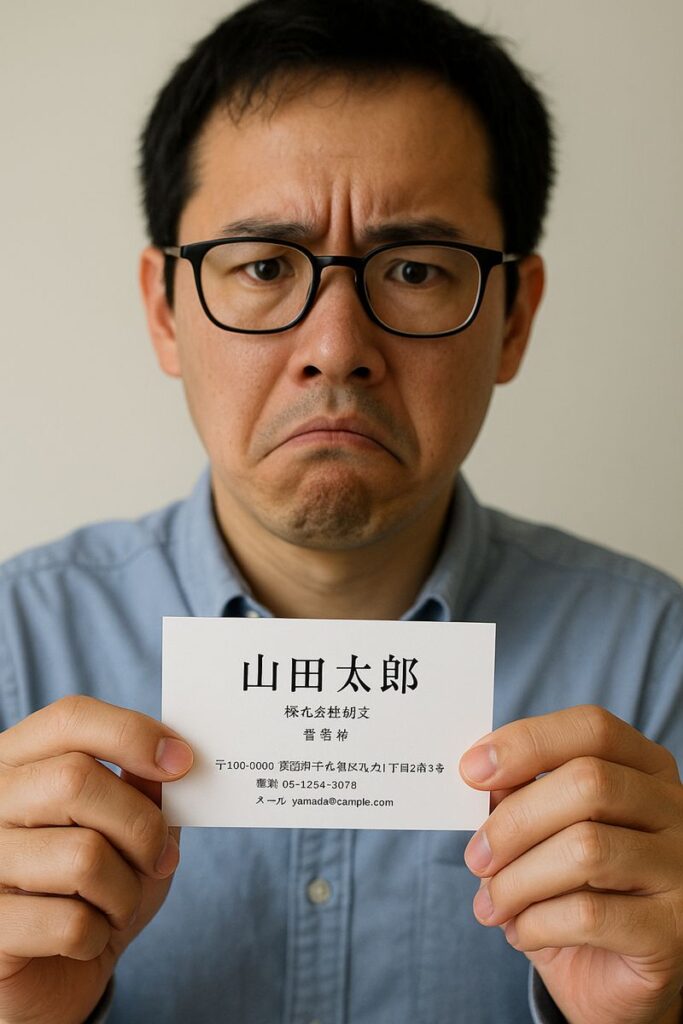
People listen to you.
But when you land in Japan, that status often disappears overnight.
Suddenly, you cannot read the mail in your mailbox. You do not know how to throw away the garbage (in my town in Niigata, the recycling rules are very strict!). You might be working a job that feels “below” your previous pay grade just to secure a visa.
Financial planning becomes critical here. Before you make the leap, you need to understand the real [Cost of Living in Japan for Immigrants Over 40] so you don’t burn through your savings unexpectedly.
You go from being a Master to a Beginner.
For many people, this hurts. It feels like a loss of identity. It feels like regression.
This is where the “Crucial Skill” comes in. If you fight this feeling, you will break. If you embrace it, you will grow.
The Crucial Skill: Sunao (素直)
In Japan, we have a concept called Sunao.
If you look it up in a standard dictionary, it often translates to “obedient,” “meek,” or “honest.”
But for us Japanese, it means so much more than that.
To be Sunao is to have an untwisted mind.
It means having a heart that is open, flexible, and ready to absorb new things without judgement. It is the ability to say, “I don’t know,” even if you are 55 years old and used to being the boss.
In the West, we are often taught that strength means holding your ground. We value debate, logic, and proving our point.
In Japan, strength is the bamboo that bends in the wind.
To survive your move here, you must learn the art of “Reskilling your Ego.” You have to be willing to be a beginner again.
The Invisible Wall: Honne and Tatemae
One of the biggest reasons foreigners over 40 struggle is because they try to apply Western Logic to Japanese Harmony.
You need to understand the concept of Honne and Tatemae.
- Honne (本音): A person’s true feelings and desires.
- Tatemae (建前): The behavior and opinions one displays in public.
In the West, we are taught that “being authentic” means saying exactly what you think. If you don’t like an idea, you say so.
In Japan, using Tatemae is not “lying.” It is a kindness. It is a social lubricant that keeps the harmony of the group.
If you come here with a rigid mindset (“I just want people to be straight with me!”), you will constantly feel frustrated. You might feel like people are being two-faced.
But if you practice Sunao, you will learn to read the silence. You will learn that a vague “I will consider it” is actually a polite “No,” meant to save you from the embarrassment of a direct rejection.
Lessons From My Foreign Employees
I want to share some real stories from my time running my English school.
Over the last two decades, I have hired many foreign teachers. Some were fresh out of college, but many were “career pivoters”—people in their 40s and 50s looking for a second act in Japan.
The difference in their success rates was shocking.
The Story of “Mark”
Mark came to Niigata from the US. He was 52. Back home, he was a high-level manager in a logistics company.
Of course, mindset isn’t the only hurdle—paperwork is real. If you are still figuring out how to legally stay here, check out my guide on [5 Visa Options for Retirees and Mid-Career Professionals].
He moved to Japan because he loved the history, the temples, and the food.
But from day one, Mark fought against Japan.
One day, we had a staff meeting. In Japan, meetings are often just a formality to confirm what has already been decided behind the scenes (a process called Nemawashi).
Mark didn’t know this. He raised his hand and spent 20 minutes arguing why the new schedule was inefficient. He had charts. He had logic. He was right—Japan can be inefficient!
But the room went silent. The Japanese staff looked down at their desks. Mark thought he was being a leader. The staff thought he was being aggressive and selfish.
Mark later told me, “Why do we have to have a meeting just to decide the date of the next meeting? It makes no sense.”
Because he lacked Sunao, he viewed every cultural difference as a personal attack on his intelligence. He couldn’t let go of his “Manager Identity.” He wanted Japan to adapt to him.
He lasted eight months. He left feeling bitter, convinced that Japan was “backward.”
The Story of “Sarah” (The Adapter)
Then there was Sarah.
Sarah was 48, a former lawyer from the UK. She was sharp, articulate, and used to being the smartest person in the room.
But when she arrived in Japan, she deliberately hit the reset button.
One day, a younger Japanese staff member corrected Sarah on how she was handing over a business card. Sarah had done it with one hand (a big no-no!).
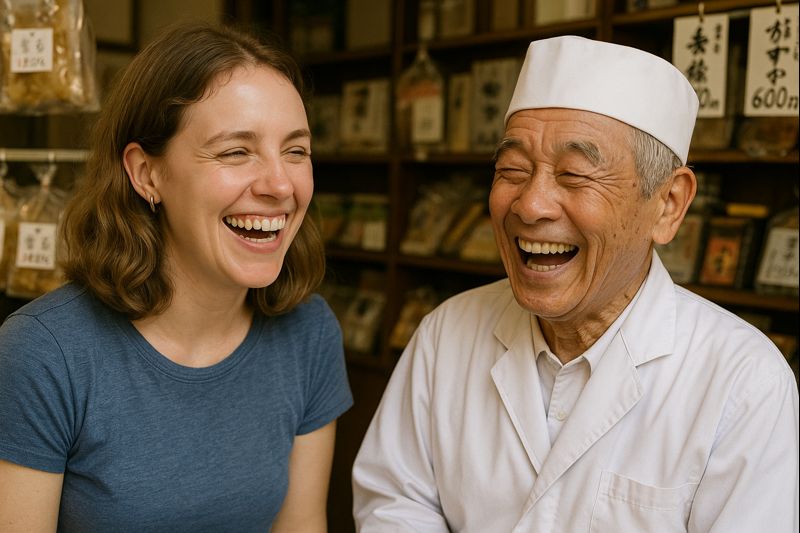
Sarah didn’t get offended. She didn’t say, “I was a lawyer for 20 years, I know how to introduce myself.”
Instead, she laughed and bowed. She said, “I am a baby in Japan! Please teach me the right way.”
She practiced Sunao.
- She accepted that things move slower here.
- She accepted that relationships matter more than efficiency.
- She found joy in learning the small things again, like how to wrap a gift properly.
Sarah has been living in Japan for 12 years now. She is part of the community. She didn’t lose her identity; she expanded it.
The Story of “David” (The Lonely Executive)
David came to us at 55. He was retired and wanted to teach English part-time.
His struggle wasn’t work rules; it was loneliness.
In his home country, he had a vast network of friends. In Japan, making friends is hard, especially for men of that generation. Japanese men in their 50s are often busy with work and family obligations. They don’t typically invite new friends over for a BBQ.
David initially sat at home, waiting for invites that never came. He felt isolated.
But David had Sunao. He realized his old way of socializing (dinner parties, drinks) wasn’t working. So, he joined a local “Go” (Japanese chess) club. He barely spoke Japanese, but he showed up every week. He watched. He learned.
He humbled himself to lose game after game to 80-year-old grandpas.
Slowly, the community opened up to him. They didn’t bond through deep conversation, but through shared activity. Now, David is the most popular guy in his neighborhood.
The “Silence” in Communication
Another aspect of Sunao is learning to be quiet.
This is very hard for Westerners! We are trained to fill the silence. If there is a pause in conversation, we get anxious and start talking.
In Japan, silence is called Ma (間). It is not empty space; it is meaningful space.
When I talk to my foreign staff, the ones who struggle are the ones who interrupt. They finish my sentences. They assume they know what I am going to say.
The ones who succeed are the ones who wait.
They listen to the air. They observe the facial expressions. By pausing, they allow the Japanese person to feel safe enough to speak.
If you are moving here, try this exercise: When you ask a question, count to five after the person stops speaking before you reply.
You will be amazed at what you hear in that extra space.
Why This is Harder After 40
If you are reading this in your 20s, you might think, “Well, obviously I need to adapt.”
But when you are 45? It is much harder.
Your brain is wired for efficiency. You have spent years learning the “right” way to do things.
When you move to Japan, you encounter a culture that is High Context. We don’t always say what we mean. We “read the air” (Kuuki wo Yomu).
- You expect: A clear “Yes” or “No.”
- Japan gives you: A vague smile and a head tilt.
If you hold on to your Western standards of communication, you will feel lied to.
If you practice Sunao, you will understand that vagueness is a form of politeness.
The “Identity Crisis”
The biggest hurdle my employees faced wasn’t the Japanese language. It was the loss of status.
- Are you ready to be corrected by someone half your age?
- Are you ready to struggle with a ticket machine while people wait behind you?
- Are you ready to be the “clueless foreigner” in the neighborhood meeting?
If you can laugh at these moments, you will succeed. If you get angry at these moments, Japan will be a very lonely place.
How to Cultivate Your “Japan Ability”
So, how do you actually do this? How do you prepare your mind for this shift before you even buy your plane ticket?
Here are my top tips for developing Sunao.
1. Practice “Active Listening” (Without Solving)
In your current job, you are probably paid to solve problems.
In Japan, listening is often more important than fixing. Try to listen to people without immediately offering your opinion or a solution. Just absorb.
2. Adoption Before Adaptation
When you first arrive, commit to a rule: “For the first 6 months, I will do it the Japanese way, even if I hate it.”
- Wear the slippers where you are supposed to.
- Sort the trash into 15 categories.
- Wait for the traffic light to turn green even if there are no cars for miles.
Don’t question it yet. Just do it. This physical practice trains your mind to be flexible. It signals to your neighbors that you respect their rules.
3. Find a Mentor (Who isn’t you)
Find someone who knows the lay of the land. It could be a Japanese friend, or a foreigner who has been here for 20 years.
When you feel frustrated, go to them. Ask, “Why does this happen?” rather than complaining “This is stupid.”
Curiosity cures frustration.
4. Drop the “Back Home” Comparisons
Every time you catch yourself saying, “In America, we do it like this…” or “In Germany, this would be faster…”—Stop.
You aren’t in America. You aren’t in Germany. You are in Japan.
Comparison is the thief of joy. Embrace the Japanese way for what it is, not for what it isn’t.
Recommended Resource
If you are looking to understand the “Silent Rules” of Japan before you arrive, I highly recommend this resource. It bridges the gap between Western logic and Japanese feeling.
📚 Essential Read: “The Japanese Mind” by Roger J. Davies & Osamu Ikeno
If you only read one book before moving, make it this one. It breaks down complex concepts like Honne/Tatemae, Giri (obligation), and Wa (harmony) into short, readable essays.
Understanding these concepts is critical for your survival here. It was required reading for my staff!
A Checklist: Are You Ready?
Before you make the big move, ask yourself these questions honestly.
- Can I handle being a beginner again? (Yes/No)
- Can I accept rules that don’t seem logical to me? (Yes/No)
- Am I moving to Japan to change it, or to be changed by it?
- Can I sit in silence without feeling awkward? (Yes/No)
- Can I laugh at myself when I make mistakes? (Yes/No)
If you answered “No” to most of these, you might want to visit as a tourist first. But if you answered “Yes,” you are on the right path.
Making the Leap
Moving to Japan after 40 is an act of bravery.
It is a “Second Youth.”
You have the chance to see the world with fresh eyes, just like a child. But you can only do that if you put down the heavy baggage of your “Expert Self.”
Japan is a wonderful place to age. The healthcare is excellent, the food is healthy, and safety is unmatched.
Further Reading on My Blog:
- [Cost of Living in Japan for Immigrants Over 40]
- [5 Visa Options for Retirees and Mid-Career Professionals]
- [My Journey: From Sado Island Hotel to English School Owner]
But the true quality of your life here depends on your mindset.
Be soft. Be open. Be Sunao.
If you can do that, Japan will not just be a place you live. It will be a place you belong.
I want to hear from you!
Does the idea of “starting over” scare you or excite you? Are you worried about the cultural differences?
Leave a comment below. I read every single one, and I would love to hear your story.
Warmly, Ayako
