

Is 53 too old to start something this hard?
I asked myself this question looking in the mirror this morning.
I am 53 years old.
In Japan, this is usually the age where people start counting the days until retirement. Therefore, most people stick to what is comfortable and stop taking risks.
However, I am doing the opposite. In face,I have decided to go back to “school.”
For my New Year’s Resolution, I am challenging myself to pass one of the most difficult national exams in Japan: the Takken (Real Estate Transaction Agent) license.
To be honest, a part of me is terrified. My memory isn’t what it was when I was 20.
But I am doing this for a very specific reason. And that reason is you.
The Scary Truth About Japanese Real Estate
Moving to Japan is a beautiful dream.
However, buying or renting a house here? That can quickly turn into a nightmare if you aren’t careful.
Specifically, the Japanese real estate system is incredibly opaque.
We have unique, confusing rules like Reikin (Key Money), Shikikin (Deposit), and Koshin-ryo (Renewal Fees).
Furthermore, it goes deeper than just money.
I have heard heartbreaking stories of foreigners falling in love with a traditional house (Kominka) in the countryside, only to find out later that:
- First, they cannot legally renovate it because of road width laws.
- Second, the land boundaries are unclear, leading to fights with neighbors.
- Finally, the house is in a designated “disaster zone” (landslide or flood risk).
As a result, because they didn’t understand the difficult legal Japanese in the contract, they signed it anyway.
They didn’t know what they didn’t know.
Why Being an “Interpreter” Isn’t Enough
Consequently, I realized that simply speaking English is not enough to help you.
I don’t want to just be your “interpreter.”
For example, an interpreter can translate the words on a page. They can tell you, “This document says the house was built in 1980.”
On the other hand, an interpreter cannot tell you if the deal is safe.
I want to be a specialist who can legally protect your assets.
In Japan, the Takken license is a powerful credential. In short, only a license holder can legally explain the critical risks of a property (Juyosetsu) to a buyer.
If I have this license, I can look at a hazard map and warn you. Additionally, I can read the fine print of the Civil Code and stop you from signing a bad deal.
I want to be your shield, not just your translator.
The Monster Exam: What is “Takken”?
So, what exactly am I studying?
The Takken exam is notorious in Japan.Actually, the pass rate is usually only 15% to 17%. That means more than 80% of people fail every year.
Specifically, it requires memorizing hundreds of laws regarding:
- Civil Code (Rights, Inheritance, Mortgages)
- Building Standards Law
- City Planning Law
- Tax Law
I went to the bookstore last week to check out the textbooks.
They were massive!
Honestly, just looking at the stack made my shoulders hurt. So, I decided to be smart about it.
I bought the Kindle versions instead.
Now, I have the entire Japanese Civil Code in my bag. I can study at a cafe, on the train, or even in bed.
But even though the digital files are weightless, the content is heavy.
When I opened the page on “Zoning Restrictions,” my head started to spin. The legal terminology is difficult even for native Japanese speakers.
It feels like I am standing at the bottom of Mount Fuji, looking up at the summit.
Embracing the Struggle
In reality, studying at 53 is a humble experience.
My eyes get tired faster than they used to. Also, I have to read the same paragraph three times before it sticks in my brain.
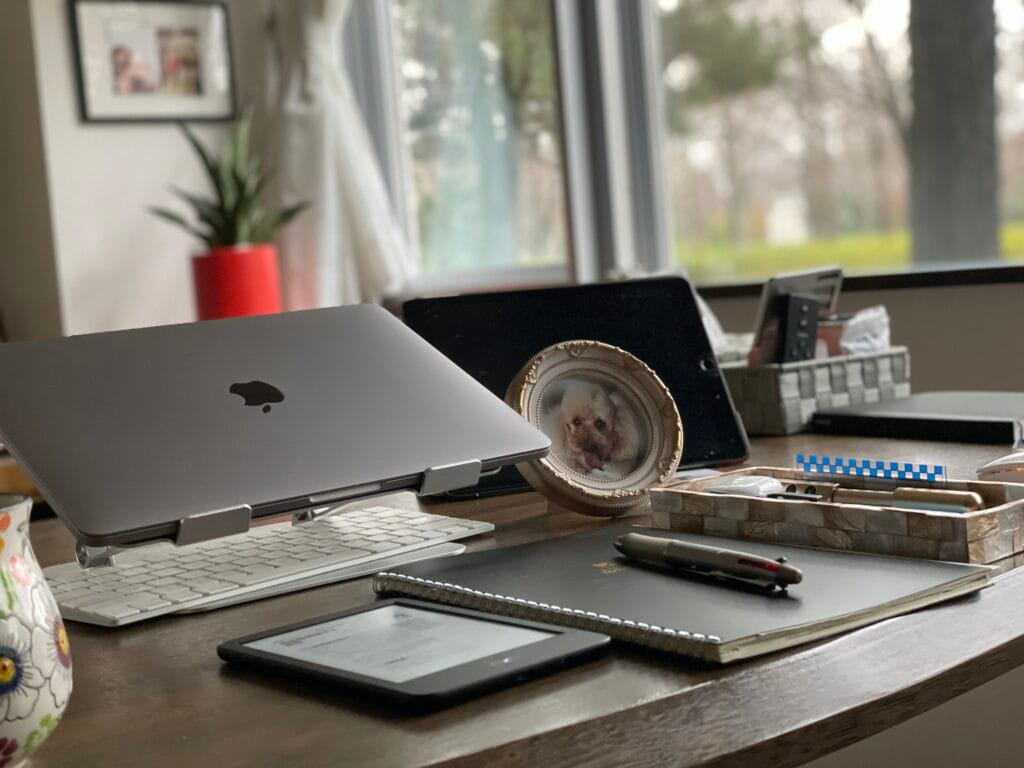
I have sticky notes all over my house now. On the fridge, on the bathroom mirror, on my desk.
But surprisingly, I am enjoying the struggle.
It makes me feel alive.
Every new law I learn is a tool I can use to help you in the future. Every difficult concept I master brings me one step closer to being the partner you need in Okinawa.
My Commitment to You: 2027
Ultimately, this is not a short sprint; it is a marathon.
My goal is to pass the exam and officially launch my full support business by 2027.
This journey will take time. It demands discipline. And, of course, it requires a lot of coffee!
But I am not just dreaming about this business anymore. I am building the foundation, brick by brick.
Most importantly, please know know that I am taking this seriously. I am investing my time and energy so that when you are finally ready to move to Okinawa, I will be ready to catch you.
I will be sharing my study progress (and probably some complaints!) along the way.
Thank you for cheering me on. Let’s work hard together in 2026.
A Message from a Stone in Hokkaido
When I feel overwhelmed by the sheer volume of laws I have to memorize, I think back to a trip I took to Hokkaido.
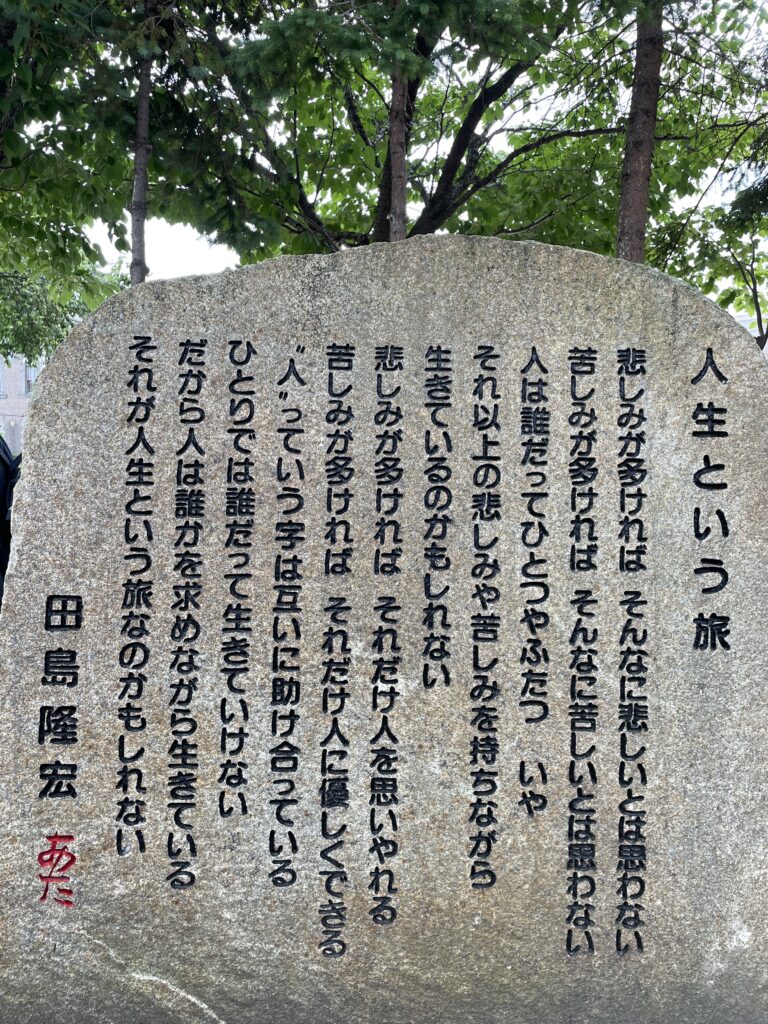
I found a stone monument there with a poem carved into it. At the time, I just thought it was beautiful. But now, as I struggle with my studies at 53, the words resonate with me deeply.
I want to share it with you.
“The Journey Called Life” (Original by Takahiro Tajima)
If you carry much sadness, it might not feel so sad after all. If you carry much pain, it might not feel so painful after all.
Everyone walks through life carrying one or two— No, perhaps even more— Burdens of sadness and pain.
But the more sadness you know, the more you can care for others. The more pain you know, the kinder you can be.
The Japanese character for “Person” (人) is made of two strokes supporting each other. No one can live all alone. That is why we live reaching out to one another.
Perhaps that is what this journey called life is all about.
Why this matters to me now
Reading this again, I realized something.
Studying for this difficult exam is a “struggle.” It is painful to feel like a beginner again.
But this struggle is necessary.
By experiencing the difficulty of Japanese laws myself, I will understand your confusion and anxiety when you move here. My “pain” of studying today will turn into “kindness” for you tomorrow.
Like the Kanji character for person (人), I want to be the stroke that supports you.
Recommended Resource
Thinking about buying a house in Japan one day?
While I study the laws, you can start studying the language! If you want to understand the basics of Japanese , I recommend starting with [italki]. It’s the most practical way to get started.
