Executive Summary
- The Internet is Misleading: Viral videos show foreigners buying cheap “¥1 houses,” but these properties usually hide fatal legal, structural, and zoning risks.
- Rising Costs are Dangerous: Construction costs and labor shortages in Japan are severe. Buying a cheap house without a strict, realistic repair budget will destroy your profits.
- Licensing is Everything: A cheap house is useless if you cannot legally rent it to tourists. Local zoning laws and hotel licenses will make or break your investment.
- The “1% Strategy” is Key: Smart investors do not buy cheap houses. They filter for the top 1% of homes with clean legal titles, strong wood frames, correct zoning, and prime tourism locations.
The Hook: The Viral Dream vs. The Investment Reality
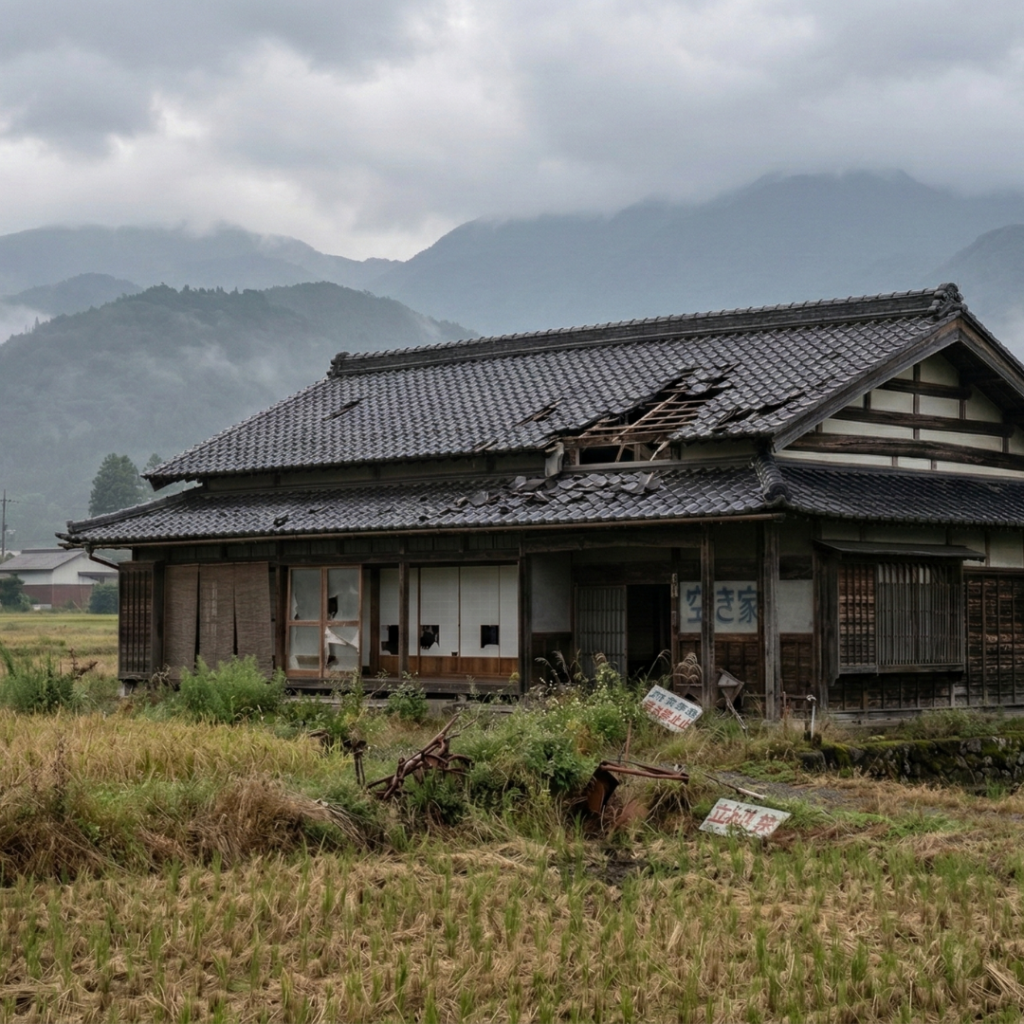
Everyone is talking about Japan empty homes, better known locally as akiya. You have likely seen viral videos of foreigners buying traditional Japanese houses for the price of a used car. It looks like a dream—the easiest way to start investing in Japan’s booming tourism market. But while buying property here is simple, managing the reality is very difficult.
I understand why these videos are so popular. However, as an asset manager, I must be honest: buying a property in Japan is easy, but managing the reality is hard. Social media shows you the purchase; it does not show you the nightmare of renovation, local taxes, and legal disputes.
If you are a serious investor looking for true returns, you must look past these viral videos. Most of these cheap properties are massive financial traps. The true strategy for investors in 2026 is finding the 1% of homes that can survive rising construction costs, secure proper hotel licenses, and generate high, reliable rental income.
A Quick Case Study: The “Cheap House” Disaster
To understand the risk, consider a common scenario we see with unguided foreign buyers.
An investor buys a beautiful, abandoned house in the countryside for just ¥3,000,000 (about $20,000 USD). They plan to spend ¥5,000,000 on light renovations and rent it on Airbnb.
Once they buy the house, the problems begin. First, the city tells them the house is in an “exclusive residential zone,” meaning short-term tourist rentals are completely banned. Second, the contractor discovers massive termite damage in the foundation. The new repair quote jumps to ¥20,000,000. Finally, because the house was empty for 10 years, the water pipes have rusted, and the city requires a massive fee to reconnect the main water line.
The investor is now stuck with a property they cannot afford to fix, cannot legally rent, and cannot easily sell. Their ¥3,000,000 “bargain” is a total loss.
The Trap: Why 99% Are Bad Investments
To a new foreign buyer, 9 million vacant homes (akiya) look like a goldmine. To a professional asset manager, they look like a dangerous trap. Most of these empty houses suffer from at least one of these three fatal problems.
1. The Title Trap
Many old houses have dead owners on the official record. Because of complex Japanese inheritance laws, a single house might have 15 or 20 missing heirs scattered across the country. In Japan, you need every single heir’s signature to transfer the property legally. Tracking them down can take years. If you cannot find even one heir, you cannot clear the title. If the title is not clean, you cannot safely renovate the house or apply for business licenses.
2. The Farmland Act
Many beautiful village homes (Kominka) are built next to farmland. The Japanese government strictly protects its agricultural areas. Foreigners cannot buy farmland. Even Japanese citizens cannot buy it unless they are officially registered farmers with the local Agricultural Committee. If your cheap dream house comes with an attached rice paddy, the government will block your purchase immediately.
3. The Hidden Repair Costs
As seen in our case study, a house might be incredibly cheap to buy, but making it safe and luxurious is not. Japan has strict earthquake codes. Old houses often have termite damage, rotting roofs, and weak foundations. To make a traditional home safe for earthquakes and beautiful for high-paying luxury tourists, you will easily spend between ¥15,000,000 and ¥30,000,000.
The 25% Construction Hurdle
Labor Shortages in Japan’s Construction Industry
Finding a house is only step one. The next step is fixing it. And the landscape for construction in Japan has changed dramatically.
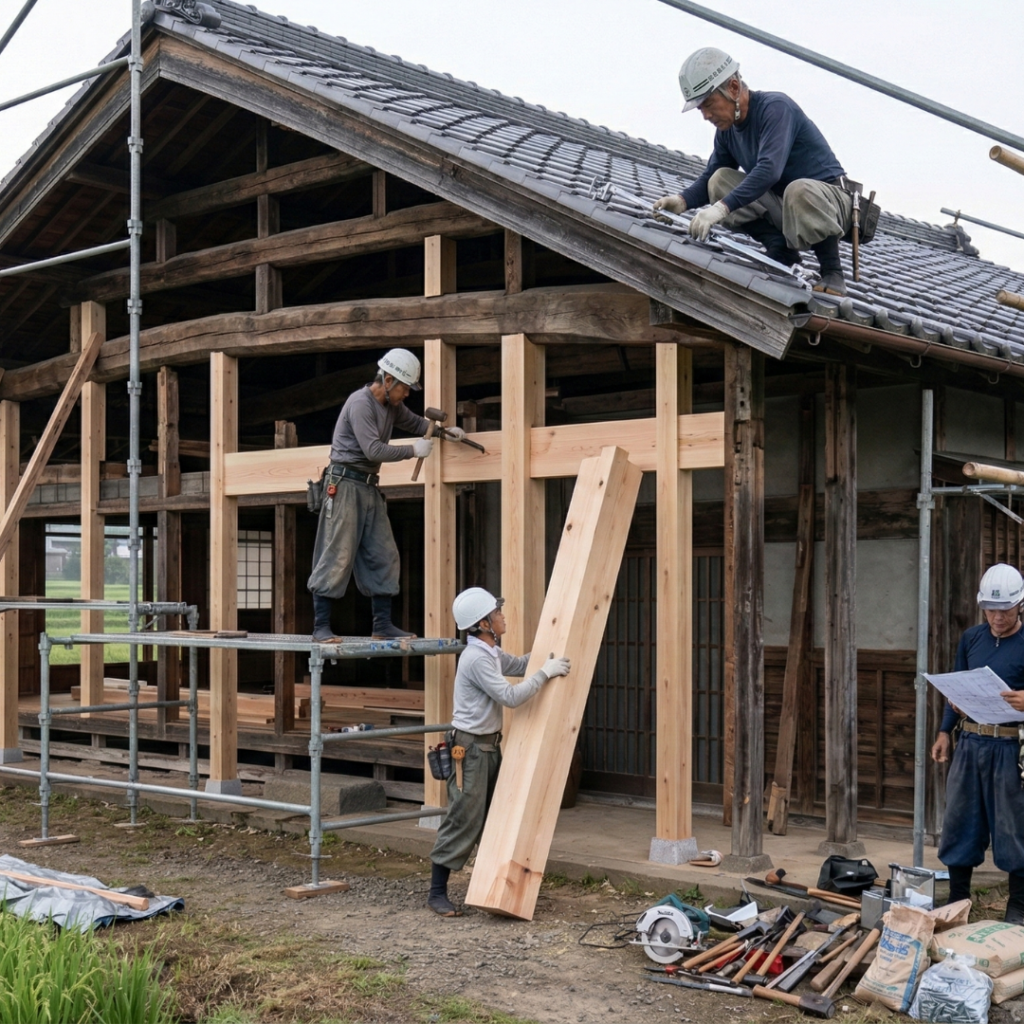
In 2026, Japan is facing a serious shortage of construction workers due to an aging population. Furthermore, recent labor laws have strictly limited the overtime hours construction workers can do. This means projects take much longer.
Rising Material Costs
At the same time, the cost of imported building materials has skyrocketed. As of March 2026, construction costs for wooden structures have surged by over 25% compared to 2021 levels. In just the last 12 months, the index jumped by 6.1%, driven by record-high copper prices for electrical systems and a critical shortage of skilled carpenters.
Why This Matters for Investors
If you buy a random akiya without a clear, professional plan, your profit margin will disappear before you even open your doors. Furthermore, good local builders are extremely busy. They prefer to work with local people they already know and trust. An overseas investor cannot simply call a local Japanese builder from Hong Kong or Singapore and expect fast, reliable service.
Data-Driven Case Study: The “Snow & Sun” Niigata Project
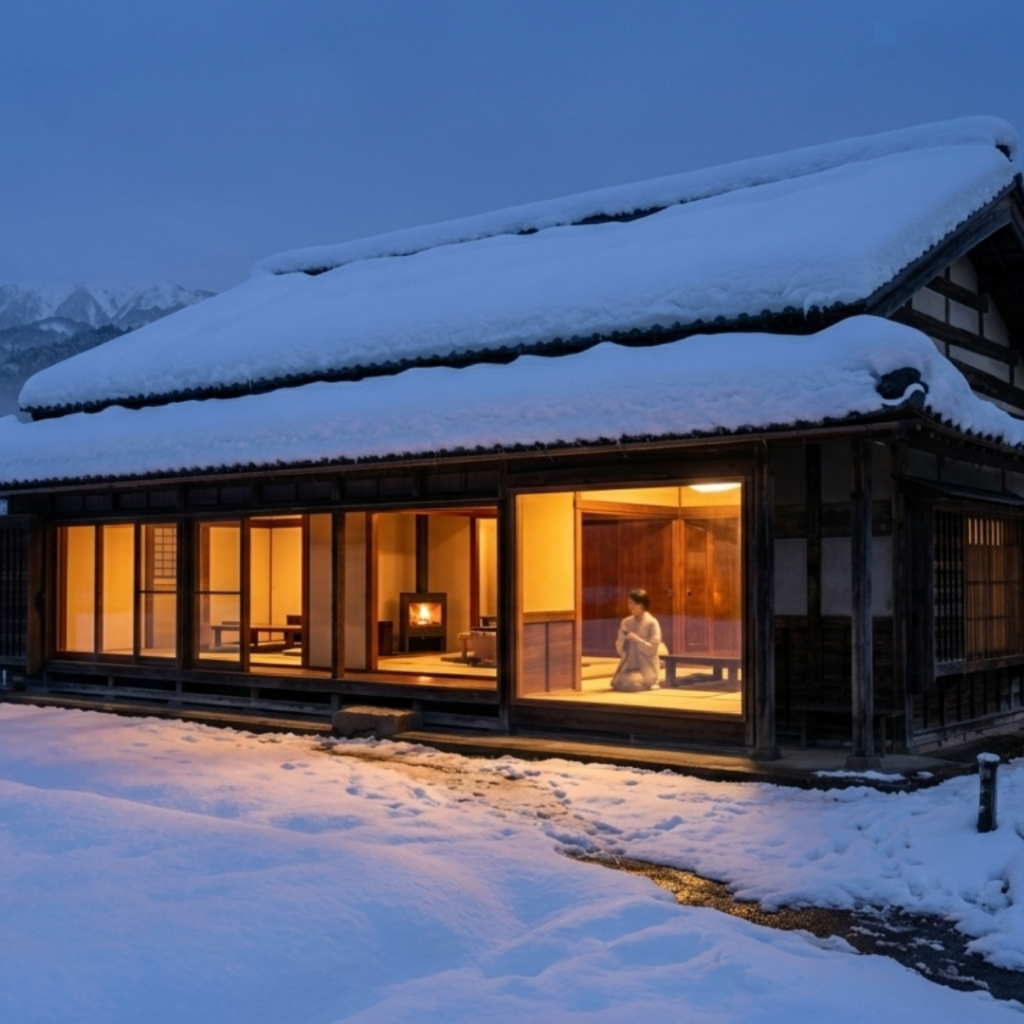
To understand the true cost of investing correctly, we must look at the math, not just the marketing. Below is a real-world financial breakdown of a recent project in a high-demand ski region in Niigata.
We acquired a 120-square-meter traditional wooden home (Kominka) located 15 minutes from a major ski resort. The property had great “bones” but required a full legal title clearing, seismic retrofitting, and a luxury upgrade to secure a strict hotel license.
Here is the exact capital breakdown and conservative yield projection for 2026:
1. Capital Expenditure (CapEx)
Many investors stop at the purchase price. We budget for the fully licensed, operational asset. Our renovation costs currently average ¥275,000-¥300,000 per square meter for a luxury, earthquake-safe standard.
| Expense Category | Cost (JPY) | Cost (Approx. USD) | Notes |
| Asset Acquisition | ¥5,000,000 | $33,000 | Includes purchase price, broker fees, and title clearing (Shiho-Shoshi). |
| Renovation (120 sqm) | ¥33,000,000 | $215,000 | Seismic bracing, modern plumbing, luxury bath, and commercial fire safety systems. |
| Licensing & Setup | ¥2,000,000 | $13,000 | Furniture, hotel licensing fees, and initial marketing. |
| Total Invested Capital | ¥40,000,000 | $261,000 | The true cost of a turnkey, licensed asset. |
2. Operating Projections & Net Yield
A gross yield of 15% is easy to project on a spreadsheet, but net yield is what actually hits your bank account. In high-snow areas, maintenance and property management (PM) eat into gross revenues. We model for a realistic 120 nights of occupancy (focusing on peak winter and summer seasons) at an Average Daily Rate (ADR) of ¥60,000.
| Revenue & Expenses | Annual Total (JPY) | % of Gross Revenue |
| Gross Annual Revenue | ¥7,800,000 | 100% (120 nights @ ¥65k ADR) |
| OTA Fees (Airbnb/Booking) | – ¥720,000 | 10% |
| Property Management | – ¥1,440,000 | 20% (Includes local boots-on-the-ground management) |
| Utilities, Cleaning & Snow | – ¥1,200,000 | ~15% (Adjusted for 2026 energy prices) |
| Fixed Asset Tax & Insurance | – ¥260,000 | ~3% |
| Net Operating Income (NOI) | ¥4,000,000 | 10% Net Yield (Cap Rate) |
The Bottom Line:
By investing ¥37,000,000 upfront into a legally pristine, structurally sound property, this asset generates a highly realistic 10% Net Cap Rate (Yield).
This is the reality of Japanese real estate. You do not make money by buying a ¥1,000,000 house and hoping for the best. You make money by deploying $250,000 USD strategically into a managed, legally compliant tourism asset.
The Solution: The 1% Strategy
Big investment funds are currently stopping their expensive, large-scale hotel projects in central Tokyo. Instead, they are moving into regional Japan to restore traditional village homes.
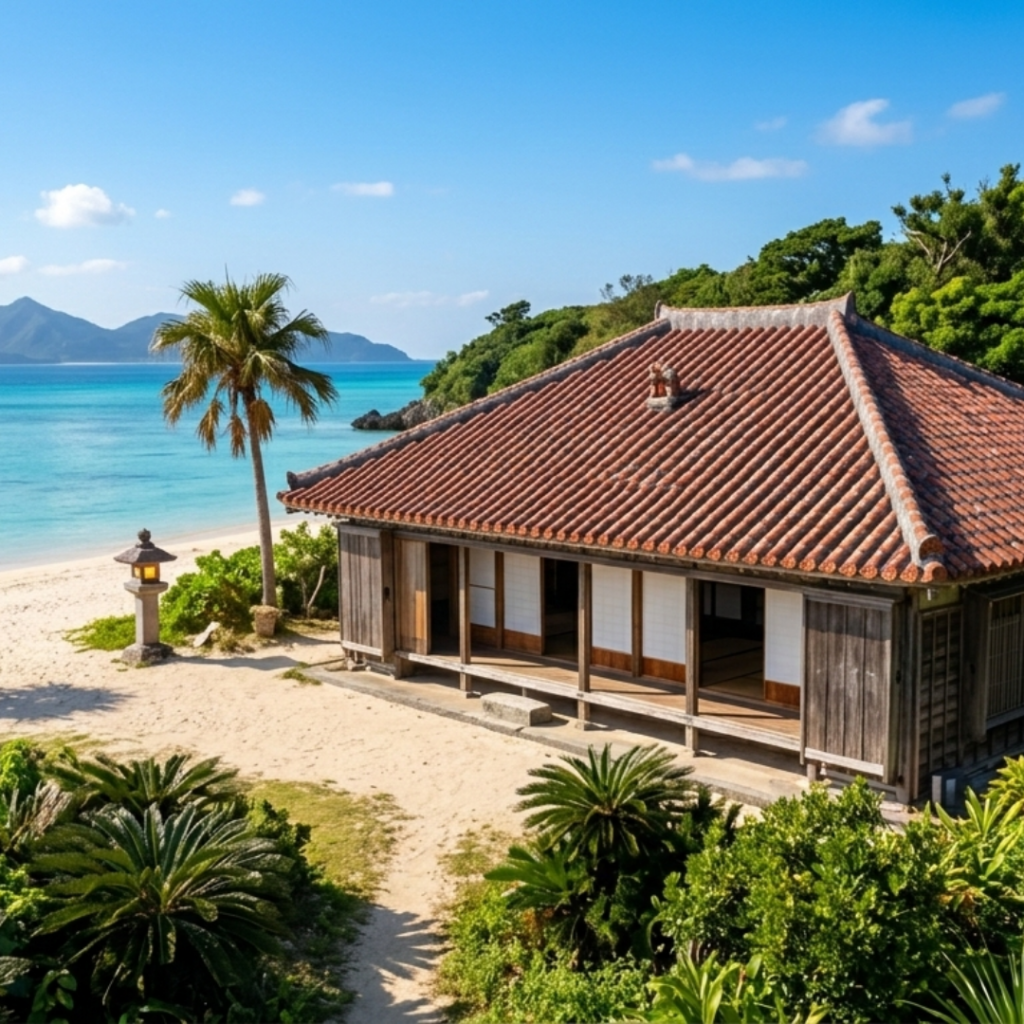
But they do not buy blindly. They filter the properties relentlessly. This is the exact strategy we use for our “Snow & Sun” portfolio in Niigata and Okinawa. We completely ignore 99% of the properties on the market. We only look for the top 1%.
To find the best assets, we filter for four non-negotiable things:
1. Clean Legal Status
We use local legal experts (Shiho-Shoshi) to check the property history before we spend a single dollar. They make sure the land is not protected farmland. They ensure the title is 100% clean, with no missing heirs, so it can be transferred to your name safely and quickly.
2. Strong Heritage Bones
We look for properties with thick, traditional wood beams (Keyaki or Hinoki wood). We want houses that only need a cosmetic update and modern plumbing, not a full structural rebuild. This keeps our renovation costs low, predictable, and fast.
3. Approved Zoning for Hotels
This is critical. We only buy properties in zones where we can legally obtain a Minpaku (short-term rental) or Ryokan-gyo (hotel) license. We ensure the property can be rented 365 days a year, maximizing your return on investment.
4. High-Yield Locations
Location is still the most important rule in real estate. We only buy in strong, proven tourism areas. We love the deep snow country of Niigata for winter sports, and the warm beaches of Okinawa for summer getaways. Wealthy international tourists gladly pay premium nightly rates to stay in these authentic, luxury homes.
The Ayako Perspective: Your Local Advantage
Managing real estate from another country is intimidating. You have to deal with different laws, a different language, and a completely different business culture. I completely understand this hesitation.
I live and work in Niigata. The winter snow here is heavy, dramatic, and incredibly beautiful. It is the reason tourists fly from all over the world to ski here. But that same snow is very hard on buildings. You have to manage roof snow removal (yuki-oroshi), protect against frozen water pipes, and heat the property efficiently. In Okinawa, you face the opposite challenge: preparing properties for heavy summer typhoons.
You cannot manage these physical risks from an office in Singapore or Taiwan. You need someone on the ground.
In regional Japan, business is not done via email. It is based on deep local relationships. It is based on visiting the neighborhood association (Chonaikai), bowing to the neighbors, and drinking green tea with city planning officials to get your hotel licenses approved smoothly.
My job is to be your dedicated “Boots on the Ground.” I negotiate with the city hall, inspect the construction progress weekly, pay the local bills, and protect your physical property. Whether it is managing the snow of Niigata or the sun of Okinawa, I handle the complex, stressful details. Your only job is to enjoy your returns safely.
Frequently Asked Questions (FAQ)
Yes. Unlike some other Asian countries, foreigners can own the house and the freehold land under it with exactly the same rights as a Japanese citizen. However, you cannot easily buy protected farmland or forestry.
No. You can send money internationally via wire transfer to buy the house. However, you will need a local property manager (like my team) to set up domestic accounts to pay your water bills, electricity, local taxes, and cleaners.
No. Buying real estate does not automatically give you a residency visa. If your goal is to live in Japan, you will usually need to establish a local company, invest a certain amount of capital, and apply for a Business Manager Visa.
Generally, no. Japanese banks are highly conservative. Unless you have permanent residency in Japan and a local income, you will not qualify for a traditional local mortgage. Overseas investors should be prepared to buy properties in cash.
Yes. Any income generated from a property located in Japan is subject to Japanese withholding and income tax, even if you do not live here. We connect our clients with bilingual Japanese tax accountants to ensure your taxes are filed correctly and optimally.