

Part 2 of a series. Part 1: The 9 Million Akiya Myth: How to Safely Invest in Japan’s Empty Homes
When people hear the word akiya, they usually imagine a neglected house selling for almost nothing. A photo of a collapsing roof. A price tag that seems too good to be true.
Sometimes that’s true.
But every so often, I come across a property that reminds me why stereotypes can be expensive. This house is one of them.
01 What I noticed first
The first thing I noticed wasn’t the architecture. It was the silence — the same quiet I wrote about in Part 1 of this Sado Island series.
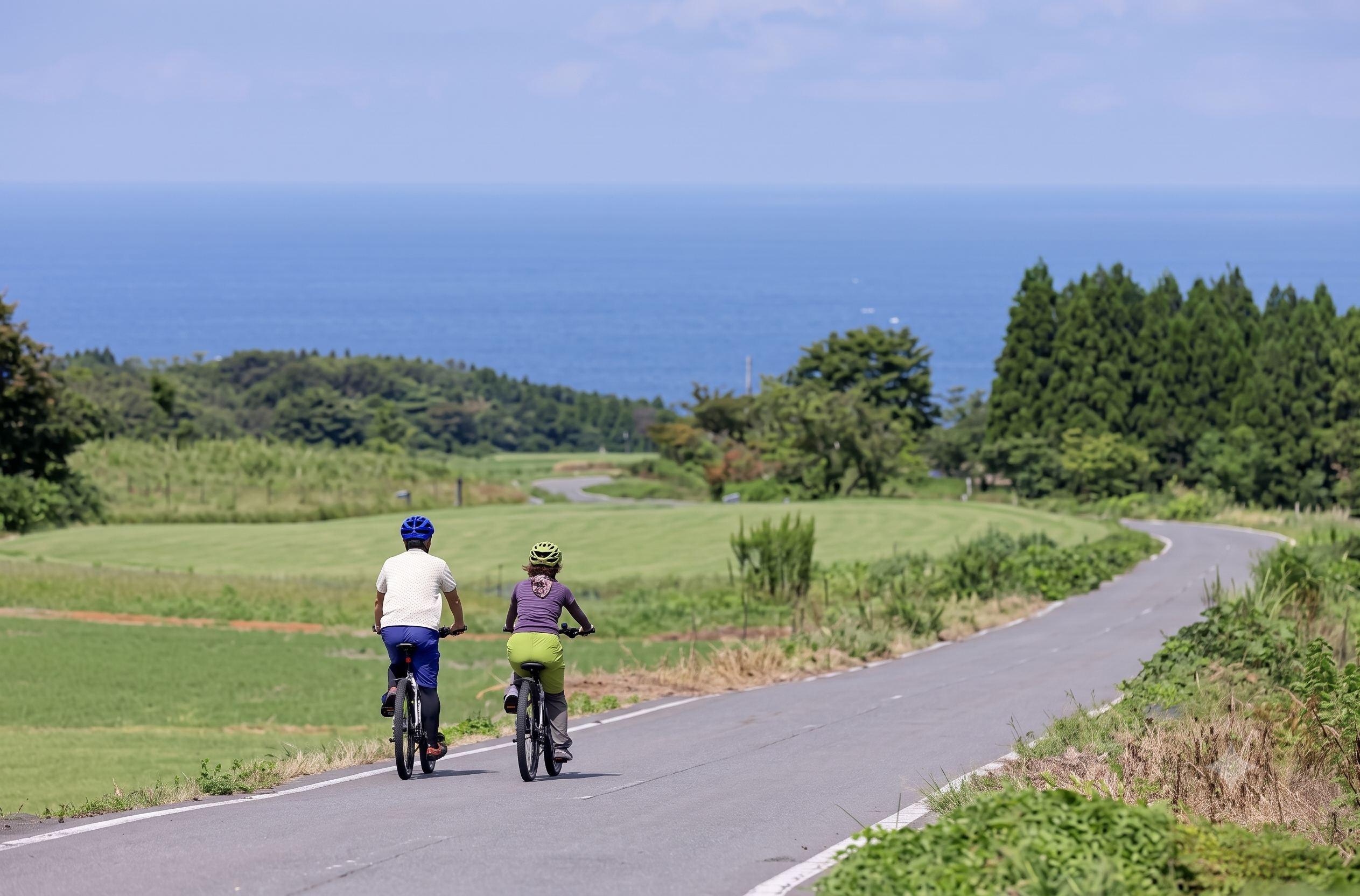
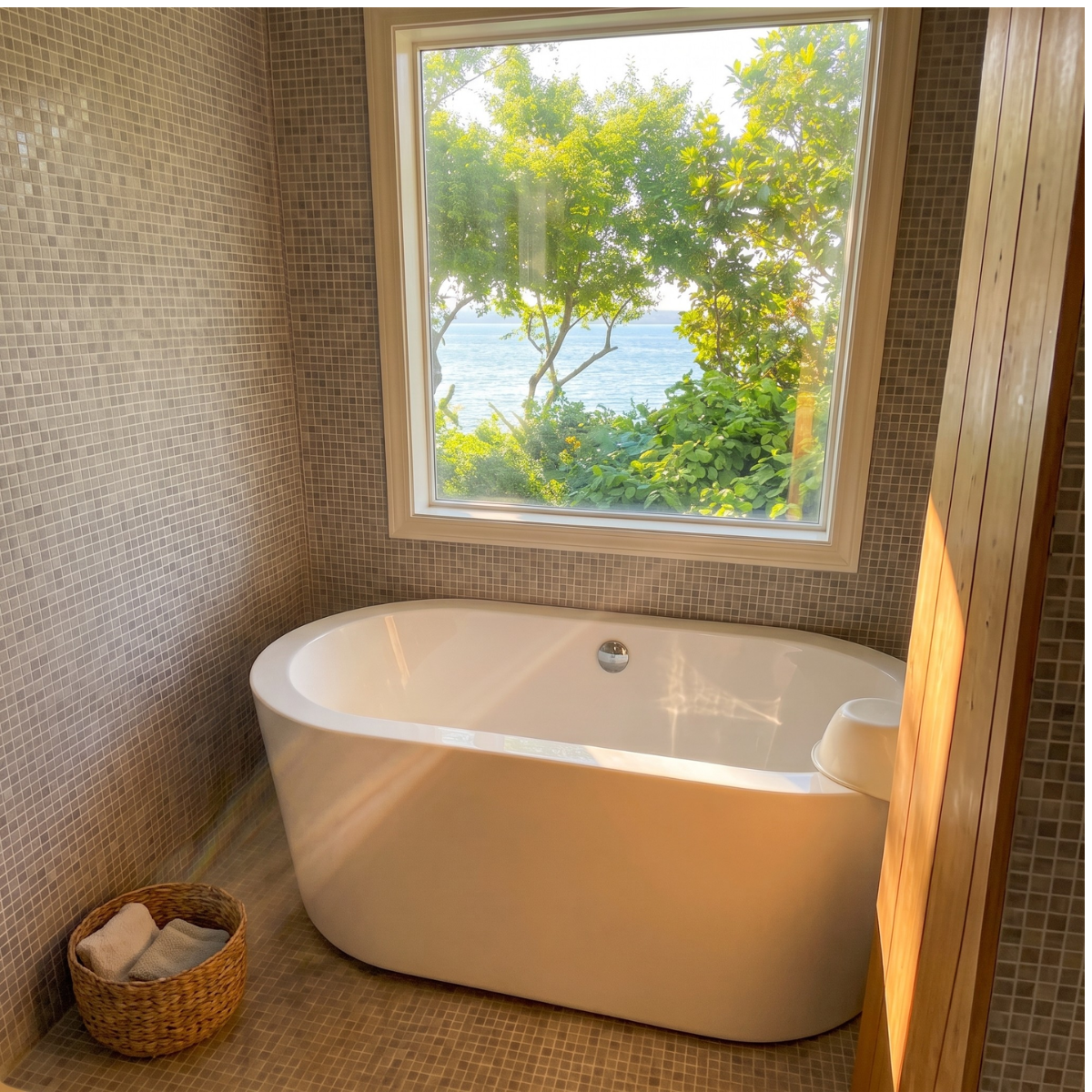
Standing on the terrace, I realized something unusual. You couldn’t hear traffic. You couldn’t hear trains. Only wind, birds, and somewhere below, the sea moving against rock. In the evening, the sky turned orange and pink over the water, and a small village sat quietly in the distance.
This is La Colline, on Sado Island, in Niigata.
02 The house before it was this house
It was not always like this.
The building started as a guesthouse, run by a local family for years before a French entrepreneur found it. He came to Sado for a short visit in 2020. One year later, he owned the building.
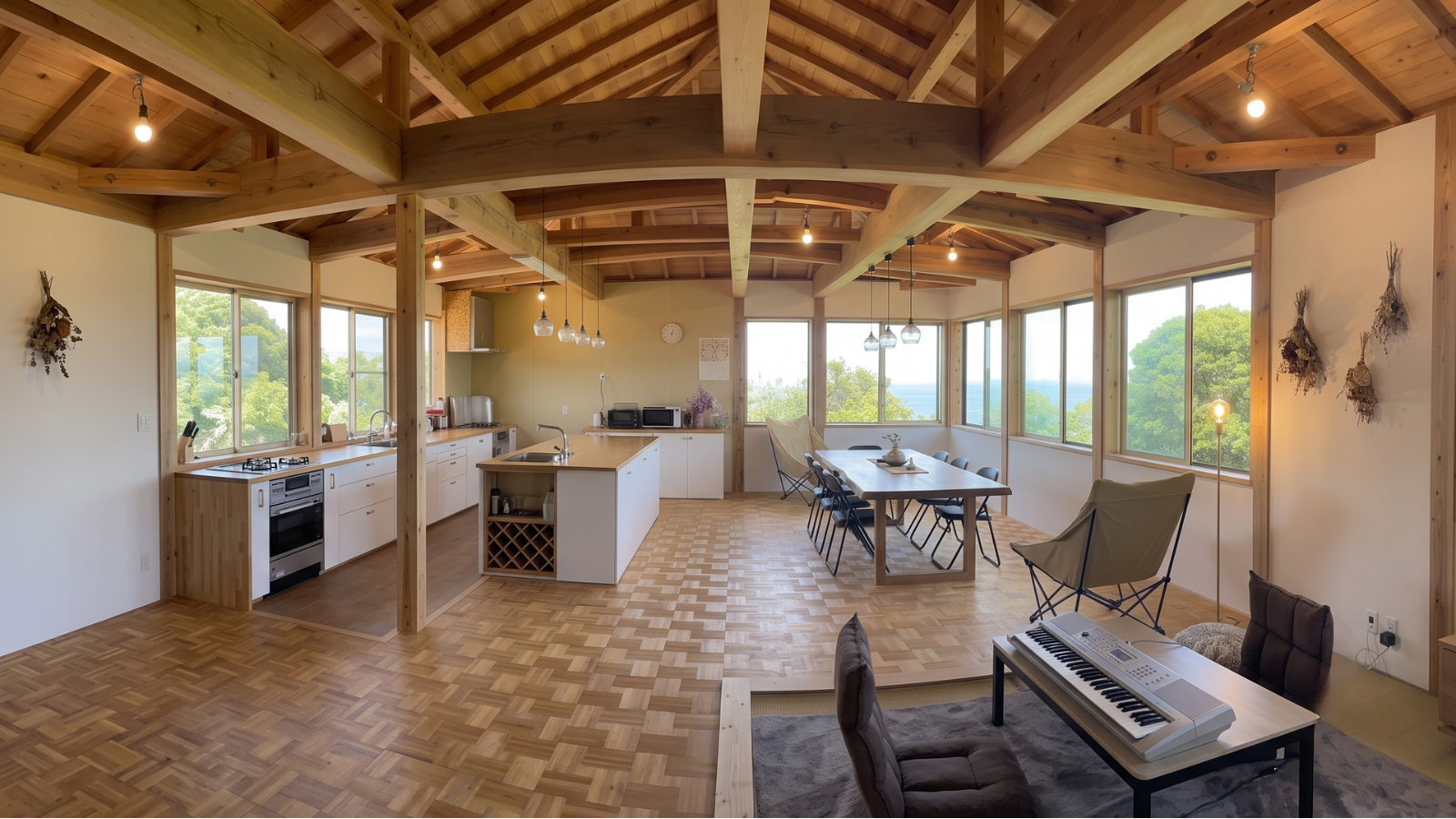
It needed real work. He did not renovate it all at once. Instead, he worked on it slowly, in stages, over several years — a little more each time he came back. In total, he invested roughly $280,000 (¥45 million) of his own money into the project, not as a quick flip, but as a slow, deliberate transformation of a building most people would have walked past without a second look.
This is the part of the akiya story that headlines usually skip. A cheap house is not an opportunity by itself. A cheap house, plus years of patience and the right vision, sometimes becomes something else entirely.
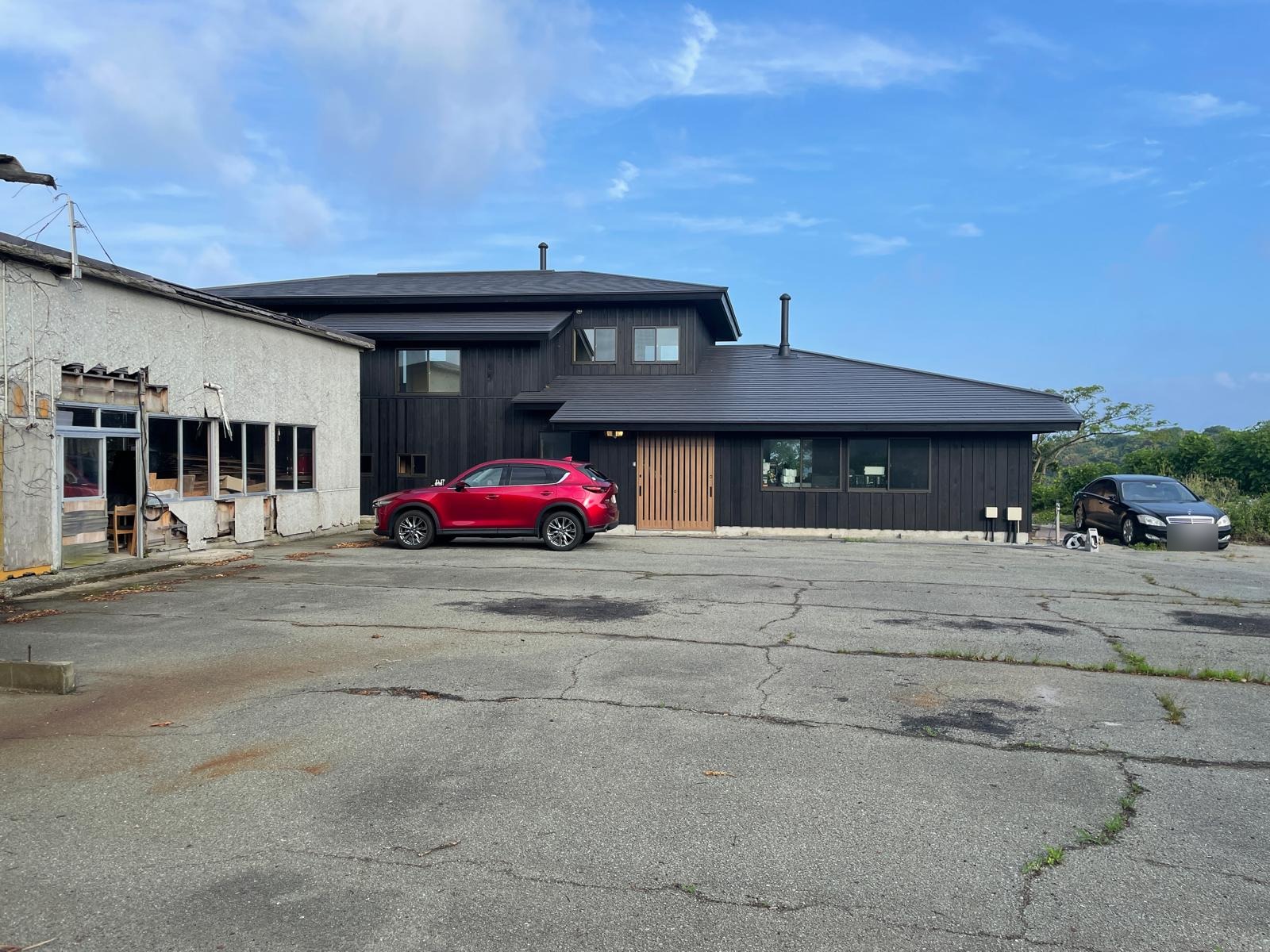
You can see this vision immediately from the outside. The striking dark exterior sets a bold tone, contrasting beautifully against the island’s natural landscape. Integrating strong architecture with the local environment is essential for properties in Niigata. This dark facade is a perfect example of how careful planning and boots-on-the-ground execution can turn an undervalued property into a high-performing, high-value asset. It signals a level of design that elevates the home far beyond a standard renovation.
03 Where overseas buyers usually look — and why they should look here
Most overseas buyers ask me where they should invest in Japan. They usually expect the answer to be Tokyo. Sometimes Kyoto. Occasionally Niseko, for the skiing.
Almost nobody asks about Sado Island.
That’s exactly why I think it’s worth paying attention.
04 Why this island, and why now
When I first introduce Sado Island to overseas buyers, many assume it’s too remote to attract sustained demand.
Yet the island is changing. Since the Sado Gold Mines were inscribed as a UNESCO World Heritage Site in 2024, tourism-purpose visitors have grown for two consecutive years — from roughly 240,000 before the pandemic, to 280,000 in 2024, to about 320,000 in 2025. Foreign visitors rose too, up roughly 20% year-on-year, though they still haven’t returned to pre-pandemic levels. As one committee member reviewing the numbers put it, the island now needs to think about quality, not just quantity — whether visitors are satisfied, and whether the island can properly support them. That combination matters: demand is genuinely growing, but the destination is still in the early stages of its development, not a finished tourist circuit. A regional impact study by Japan’s Development Bank estimated the total economic ripple effect at roughly ¥58.5 billion in the year following UNESCO registration — a sign this is a measurable shift, not just a cultural headline.
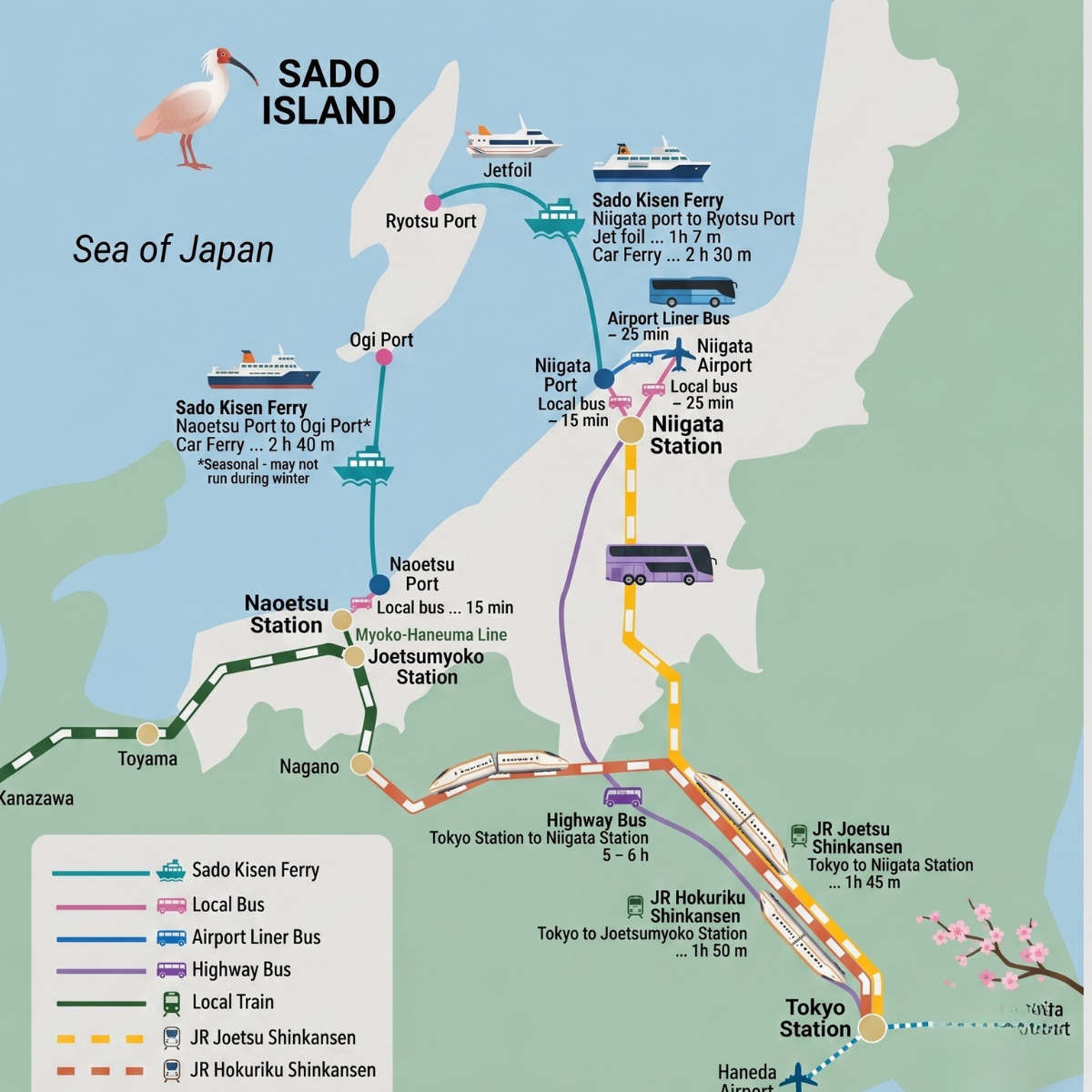
Access is also improving, gradually. Regular flights returned to Sado Airport after a long gap, and ferry services continue to connect the island to Niigata City — though infrastructure here is still evolving, not fully mature.
International buyers are also becoming more selective. Many are no longer looking only for the busiest cities. They’re looking for places with character, authenticity, and the potential to enjoy the property themselves, not just hold it as an asset. That shift doesn’t guarantee success for every regional market, but it does create opportunities in places that would have been overlooked a decade ago.
05 Why I pay attention to properties like this
I grew up connected to this region. My family has worked in the hospitality business in Niigata for generations, and I’ve spent twenty years learning how to help people from very different backgrounds understand a place that isn’t their own.
Today, I help international buyers evaluate opportunities in Japan that are difficult to judge from overseas — the difference between a house that is simply cheap, and a house that is genuinely worth the effort.
06 Not every akiya is a bargain
I want to be honest about something. Most akiya are not investments. They are old buildings with real problems: structural damage, snow-season wear, and renovation costs that are frequently underestimated. My previous article on Japan’s 9 million vacant homes was, in part, a warning about this.
La Colline is different, not because it was cheap, but because someone put in years of sustained work to make it worth owning. Unlike many akiya, this house wasn’t rescued because it was inexpensive. It became exceptional because someone invested years of careful work, real capital, and a clear long-term vision. That distinction — between a discount and an opportunity — is the one I think overseas buyers most need to learn to see for themselves.
Properties like this are also rare, for a simple reason: most renovated homes in regional Japan stay private, passed on quietly within a family or a small local network, and never reach the international market at all. Finding a house that combines architectural character, privacy, a real sea view, and proven renovation quality is unusual, whether the price is high or low.
07 How I actually evaluate a property
When I evaluate a property for an overseas client, I don’t start with the asking price. I look at access, legal status, renovation history, long-term maintenance, local demand, and whether the property offers something that genuinely cannot be replicated nearby.
Over the years, I’ve found it useful to ask the same five questions of every property I look at:
- 1Is the location becoming stronger or weaker?
- 2Can the building realistically be restored?
- 3Is there something genuinely unique about it?
- 4Will people still want it in ten years?
- 5Does the purchase make financial sense after renovation — not before?
La Colline doesn’t pass that test because it was once an akiya. It passes because someone transformed it into something difficult to replace.
08 A closing thought
The best investments rarely begin with the lowest price. They begin with seeing value that others overlook.
Sometimes the greatest value isn’t hidden in the cheapest house. It’s hidden in the house that everyone else overlooked.
I think La Colline is one example of that. If you’re considering buying property in regional Japan, I’d be happy to share what I’ve learned working with overseas buyers — including how I evaluate opportunities like this one.
