

The Akiya Tax Trap
How a vacant house can cost you Japan’s most valuable property tax reduction
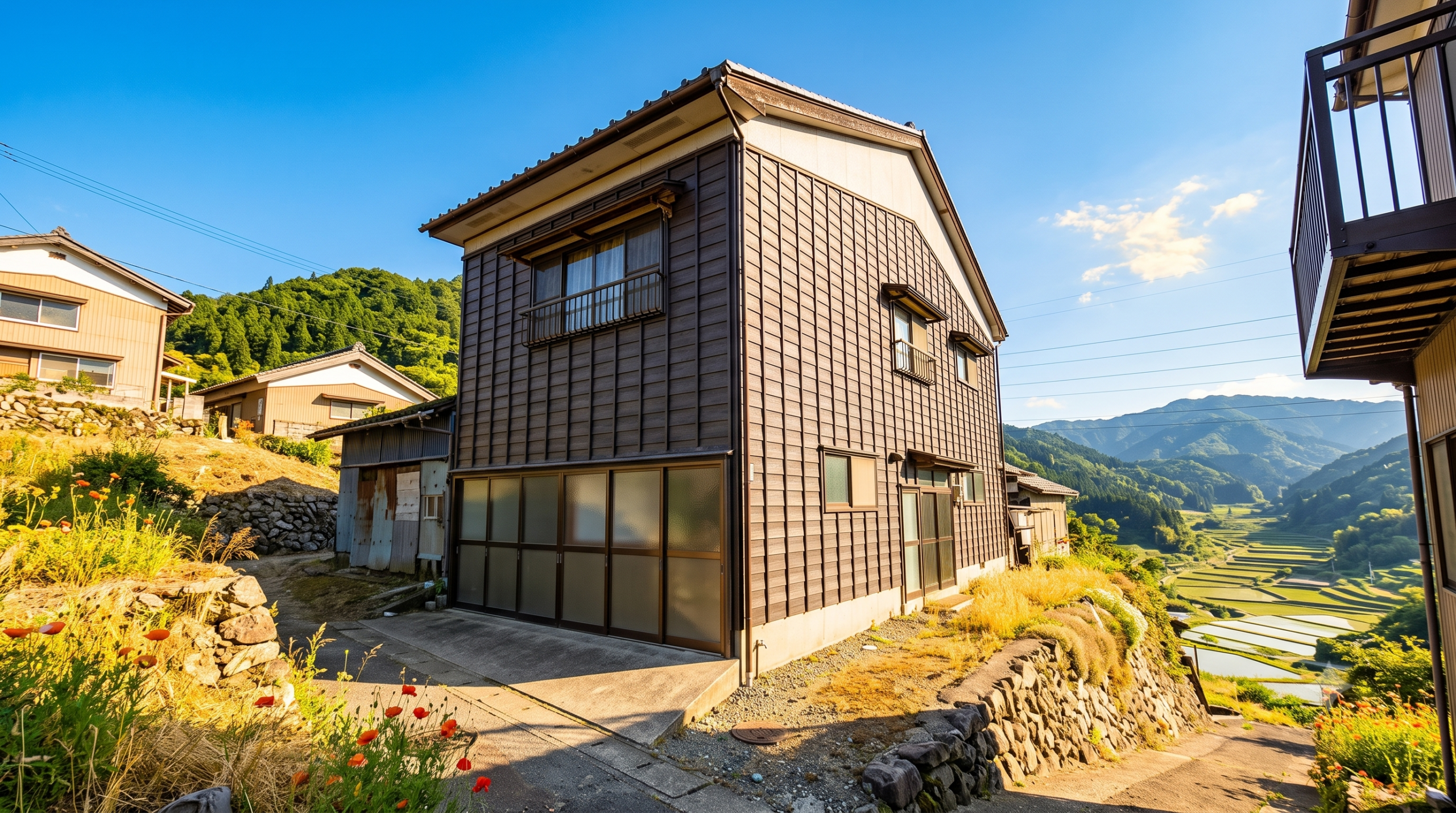
Many overseas buyers purchase an akiya believing they can leave it untouched until they are ready to renovate. In many countries, that is perfectly reasonable. In Japan, however, leaving a vacant house neglected can have unexpected tax consequences.
One of the biggest financial risks is not the roof, the termites, or renovation costs. It is property tax.
Under certain conditions, a neglected vacant house can lose one of Japan’s most valuable property tax reductions. For some owners, this can raise the taxable value of their land by up to about six times.
Here is what every foreign investor should know before buying an akiya.
The hidden tax benefit
Japan’s Fixed Asset Tax (Kotei Shisan Zei) is charged every year on land and buildings.
For most residential properties, there is a valuable tax advantage. Small residential land generally qualifies for a special measure. This measure can reduce the taxable value of the land to one-sixth of its standard assessed value.
Japan’s Ministry of Land, Infrastructure, Transport and Tourism (MLIT) created this measure to keep residential land in use, not left empty. As a result, many homeowners pay much less land tax than they otherwise would.
When the reduction can disappear
| Topic | What you need to know |
|---|---|
| Normal rule | Residential land may qualify for a one-sixth tax reduction. |
| Warning signs | Weeds, rubbish, structural damage, broken windows. |
| Municipality action | Inspection → guidance → recommendation. |
| Tax consequence | The residential land reduction may be removed. |
| Prevention | Regular maintenance and local management. |
The problem starts when a house is left vacant and falls into disrepair.
Under Japan’s Vacant Houses Special Measures Act, a municipality can investigate a property that has become neglected or unsafe. If conditions are serious enough, the municipality can designate it a Specified Vacant House (Tokutei Akiya).
A 2023 amendment to the law added an earlier warning stage, called a Management-Inadequate Vacant House (Kanri Fuzen Akiya). This lets municipalities act before a property becomes a full Specified Vacant House.
Common triggers include:
- Overgrown vegetation
- Accumulated rubbish
- Broken windows or unsecured entrances
- Structural deterioration
- Falling roof tiles or exterior materials
- Pest infestations
- Conditions that create safety or sanitation concerns
If the municipality issues a formal recommendation and the owner does not fix the issues, the property can lose its residential land tax reduction.
This does not always mean the final tax bill becomes exactly six times higher. What happens is that the land no longer qualifies for the one-sixth reduction. The land may be assessed at its full taxable value instead of the reduced residential rate. Depending on the property and local calculations, the annual tax burden can rise sharply.
Why this matters for overseas owners
Many foreign buyers purchase an akiya with good intentions.
Perhaps they are waiting for renovation quotes. Maybe they are arranging visas. Some still live overseas and plan to move in next year.
From the owner’s view, the house is simply “waiting.” From the municipality’s view, an unattended property can quickly become a problem for the neighborhood.
This often happens because owners underestimate how fast gardens grow, roofs age, or weather affects older buildings. Distance does not change the owner’s legal duties.
A real investment risk
Imagine you buy a charming farmhouse in rural Japan for 4 million yen.
You plan to renovate it next spring, but finding contractors takes longer than expected.
Months pass. The garden becomes overgrown. The gutters fill with leaves. Neighbors report the property to the municipality.
Suddenly, you are dealing with more than delayed renovations. You may also be at risk of losing an important property tax benefit.
This is not just a maintenance issue. It is part of your investment strategy.
Good management protects more than the building
Regular inspections do more than keep a property tidy. They help protect your investment by:
- Finding maintenance problems early
- Keeping the property compliant with local rules
- Reducing the risk of official warnings
- Preserving valuable tax benefits where they apply
- Maintaining good relationships with neighbors and local authorities
For overseas investors, having someone on the ground is more than convenient. It can help prevent costly surprises.
My role as an Owner’s Representative
Most of my clients do not live in Japan. They need someone who understands both the property and the local area.
My role includes coordinating inspections, arranging maintenance, communicating with contractors, and making sure the property stays properly managed.
Whether you plan to renovate right away or move to Japan later, protecting your investment starts long before construction begins. Sometimes the most valuable work happens before anyone picks up a hammer.
A closing thought
Buying an akiya is not simply about finding a cheap house.
It is about understanding the responsibilities that come with owning property in Japan.
A neglected home can become far more expensive than many buyers expect. Not because of renovation costs, but because a valuable tax advantage may be lost.
Good local management protects more than the building. It protects your investment.
Quick questions from buyers
What is a Specified Vacant House (Tokutei Akiya)?
It is an official status. A municipality gives this status to a vacant house that is unsafe, unsanitary, or badly neglected.
When exactly do I lose the tax reduction?
In many cases, the reduction may be lost after a formal recommendation, if the owner does not correct the issues. Designation alone is not enough to trigger the loss.
Can I get the tax reduction back?
Yes. If you fix the problems and the recommendation is withdrawn in the same year it was issued, the higher tax does not apply for that year.
What should I do if my property is far from where I live?
Arrange regular local inspections and a local contact. This is the easiest way to catch problems early, before a municipality gets involved.
References
- MLIT, Vacant Houses Special Measures Act, related information — 住宅:空家等対策の推進に関する特別措置法関連情報
- MLIT, guidelines on measures against Management-Inadequate and Specified Vacant Houses (December 2023 amendment) — 管理不全空家等及び特定空家等に対する措置に関する指針
- MLIT, residential land tax measures related to vacant house countermeasures — 固定資産税等の住宅用地特例に係る空き家対策上の措置
- National Tax Agency (NTA), special deduction on capital gains for inherited vacant homes — No.3306 被相続人の居住用財産(空き家)を売ったときの特例
- Baba, A., Ruiz-Varona, A., & Asami, Y., Policies and Tax Systems for Regulating Vacant Houses: A Case Study on Spain and Japan — J-STAGE, Urban and Regional Planning Review, Vol. 9
